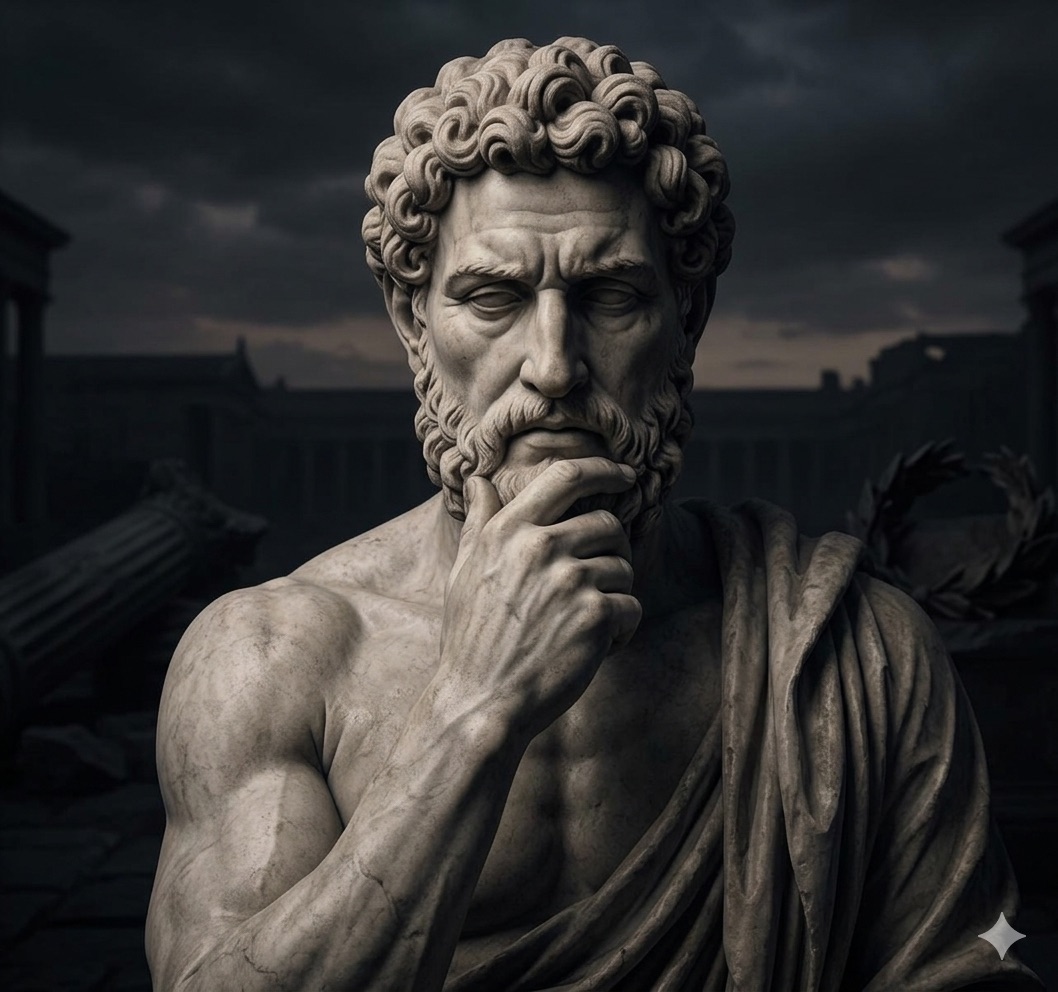

Welcome, friend, to Stoicism Secrets. Today, we’re going to talk about something really important. We all want our lives to feel good, to feel like they matter. We want a meaningful life.
Stoicism isn’t about being glum or emotionless. It’s actually a wonderful map for finding deep contentment and purpose. It helps us build a life that feels rich and full, no matter what happens around us. Let’s explore this path together.
What Does “Meaningful” Even Mean?
Sometimes, we think a meaningful life means being famous, or rich, or having everything perfect. But Stoicism points to something different. It says meaning comes from inside us, not from what we own or what other people think.
Think about a sturdy tree. It doesn’t become strong by wishing for different soil. It grows strong by using what it has. A meaningful life is a bit like that. It’s about how we live, day by day, moment by moment.
It’s about living well. It’s about being a good person. That’s the core of it.
Imagine you’re going on a long hike. You need a compass to know where you’re going. Stoicism gives us an inner compass. It helps us figure out what truly matters.
Why Values Are Your Guiding Stars
Stoics believed in something called virtues. These are like super good qualities. Things like wisdom, justice, courage, and self-control. They are like our inner guiding stars.
If you are wise, you make good choices. If you are just, you treat others fairly. If you are courageous, you face your fears. If you have self-control, you don’t let your feelings run wild.
Think about a time you helped someone. You probably felt good, right? That’s because you acted with a good quality, like kindness or justice. These actions create meaning.
Living by these values makes our lives feel solid. It gives us a strong foundation. This is a big secret to a meaningful life.
Knowing What’s Up to You (and What Isn’t)
This is a huge Stoic secret. Some things are in our control. We control our thoughts, our actions, our choices. We decide how we react.
Other things are not in our control. We can’t control the weather. We can’t control what other people say or do. We can’t control if traffic is bad.
Worrying about things we can’t control is like trying to push a rope uphill. It’s exhausting and pointless. It steals our joy.
Focusing on what we can control, our own efforts and attitudes, gives us power. It gives us peace. This helps us build a more meaningful life. We put our energy where it actually makes a difference.
In exploring the principles of Stoicism and how they can enhance our lives, a related article that delves into the complexities of human attachments is “The Stoic Perspective on Attachments: The Dark Side.” This insightful piece examines how Stoic philosophy encourages us to understand and manage our attachments to people and things, ultimately guiding us towards a more meaningful existence. For further reading, you can access the article here: The Stoic Perspective on Attachments: The Dark Side.
Being Present: The Power of Now
Have you ever been so busy thinking about tomorrow, you missed what was happening today? It’s easy to do. But Stoicism nudges us to slow down. It asks us to pay attention to right now.
Noticing Today’s Gifts
Imagine you’re eating your favorite snack. If you gobble it down while looking at your phone, you might not even taste it. But if you slow down, notice the smell, the texture, the flavor, it’s a much richer experience.
Life is full of these small moments. The warmth of your coffee. The sound of birds outside. A friendly text from a friend. These are tiny gifts.
When we notice them, we appreciate them. This appreciation makes our days richer. It adds meaning to the ordinary. It makes life feel fuller.
Learning from the Past, Planning for the Future, Living Today
Stoics understood that we think about the past and the future. That’s normal. We learn from yesterday’s mistakes. We plan for tomorrow’s meeting.
But don’t get stuck there. Don’t drown in regrets about the past. Don’t get lost in anxieties about the future.
Your power is always in the present moment. That’s where you can think clearly. That’s where you can act well. That’s where you can choose your attitude.
This focus on the present is a cornerstone of living a meaningful life. It’s where real life happens.
Embracing Challenges: Growing Stronger

Life isn’t always easy. We face problems. We have setbacks. This is part of being human.
Stoicism doesn’t say “pretend problems don’t exist.” It says “problems are opportunities to grow.”
Seeing Obstacles as Teachers
Think about a runner who trains for a marathon. The training is tough. There are tired muscles, long distances. But each challenge makes them stronger.
Our own life challenges are like that. A difficult conversation can teach us patience. A failed project can teach us how to try again, better. A loss can teach us resilience.
When things go wrong, instead of asking “Why me?”, try asking “What can this teach me?” This shift in thinking changes everything. It turns setbacks into lessons.
This perspective is powerful. It builds inner strength. It’s how we grow into better, wiser people. This growth contributes greatly to a meaningful life.
Handling What Happens with Grace
Sometimes bad things happen that are truly awful. We feel sad, angry, scared. These feelings are natural. Stoicism doesn’t tell us to ignore them.
But it does ask us to meet these challenges with dignity. To do our best, even when it’s hard. To keep our inner peace, even when the world is chaotic.
It means accepting what we cannot change. It means finding peace in difficult situations. It means choosing how we respond, even when we didn’t choose what happened. This is a profound secret to a meaningful life. It gives us steady footing in a shaking world.
Connecting with Others: Our Shared Humanity

We are not alone on this planet. We are part of a big human family. Stoicism reminds us of this important connection.
Being a Good Neighbor
Think about your community. Your family, your friends, your colleagues. Even the person who serves you coffee. We all interact.
Stoicism encourages us to be good to others. To be fair. To be kind. To help when we can.
When you hold a door open for someone, that’s a small act of kindness. When you truly listen to a friend, that’s being a good friend. These actions ripple out. They make the world a little better.
Being part of something bigger than ourselves brings great meaning. It makes our own lives richer. It’s a key part of the Stoic path.
Seeing Others as Fellow Travelers
Imagine everyone on Earth is on their own journey. Some journeys are easy, some are very hard. We all face challenges. We all want happiness.
When we remember this, it’s easier to be patient. It’s easier to forgive. It’s easier to offer understanding.
This idea is sometimes called “cosmic citizenship.” It means we are all citizens of the world. We share this life.
Our interactions with others have a huge impact. Being a positive force in their lives, even in small ways, builds a meaningful life for ourselves. We are all connected in this human tapestry.
In exploring the principles of Stoicism, one can gain valuable insights into achieving a meaningful life through the acceptance of things beyond our control. A related article that delves deeper into this concept is available at How to Let Go of Things You Can’t Control, which provides practical strategies for embracing the Stoic mindset. By understanding and applying these teachings, individuals can cultivate resilience and find greater peace in their daily lives.
Practicing Gratitude: The Art of Appreciation
| Principle | Explanation |
|---|---|
| Live in accordance with nature | Align your actions with the natural order of the universe. |
| Focus on what you can control | Direct your energy towards things within your control and accept what you cannot change. |
| Practice self-discipline | Develop self-control and resilience in the face of challenges. |
| Cultivate gratitude | Appreciate the present moment and be thankful for what you have. |
| Embrace adversity | View obstacles as opportunities for growth and learning. |
It’s easy to focus on what we don’t have. Or what went wrong. But Stoicism gently guides us to notice what is good. To be grateful.
Finding Thanks in the Everyday
Think about your morning. Did you have a warm bed? A roof over your head? Clean water? A working body? These are not small things.
Taking a moment to appreciate these everyday things can change your outlook. It shifts your focus from lack to abundance.
Maybe you are grateful for a sunny day. Or for a good book. Or for a pet that makes you smile. These small moments of gratitude add up.
They paint a brighter picture of our lives. They show us how much good is already present. This practice is vital for a meaningful life.
Remembering What We Have
Sometimes, to really appreciate something, we imagine not having it. What if your phone broke? You’d realize how much you use it. What if a friend moved far away? You’d miss their presence.
This isn’t about being sad. It’s about remembering how valuable these things, and people, truly are while we have them. It’s a powerful way to cultivate appreciation.
Regularly pausing to think about what you are thankful for is a simple, yet profound, Stoic practice. It helps us feel content. It helps us see the meaning in our existing lives, rather than constantly chasing more. It’s about recognizing the richness that’s already there.
Living with Purpose: Choosing Your Direction
A meaningful life isn’t just about existing. It’s about choosing to live in a certain way. It’s about having a direction.
Defining Your Own “Good Life”
What does a good life look like for you? It’s not about what your neighbor thinks. It’s not about what ads tell you.
For the Stoics, a good life was a virtuous life. A life where you act with wisdom, justice, courage, and self-control. These are your guiding principles.
You get to decide how these principles play out in your daily life. Do you use wisdom to make decisions at work? Do you use courage to speak up when something isn’t fair?
These choices shape your life. They give it a profound sense of purpose. This is the heart of a meaningful life.
Taking Action, Step by Step
Knowing what you want your life to be like is one thing. Doing it is another. Stoicism is very practical. It’s about action.
Every day, you have a chance to live according to your values. To choose kindness. To choose patience. To choose honesty.
Don’t wait for a grand moment. Start with small steps. These small, consistent actions build momentum. They build character.
And character is what truly makes a life meaningful. It’s the accumulation of all your good choices. It’s how you become the person you want to be. It forms the very fabric of a meaningful life.
A Calm, Steady Journey
The Stoic path to a meaningful life isn’t a race. It’s a journey. It’s about understanding yourself. It’s about making good choices. It’s about being present. It’s about growing from challenges. It’s about connecting with others. It’s about gratitude. And it’s about living with purpose.
It’s not about perfection. It’s about ongoing effort. It’s about being a little better today than you were yesterday. And choosing to do that again tomorrow.
This path is available to anyone, at any time. It’s right here, within your control. It’s about creating a life that feels deeply satisfying, quietly purposeful, and truly yours. What a beautiful secret to uncover.