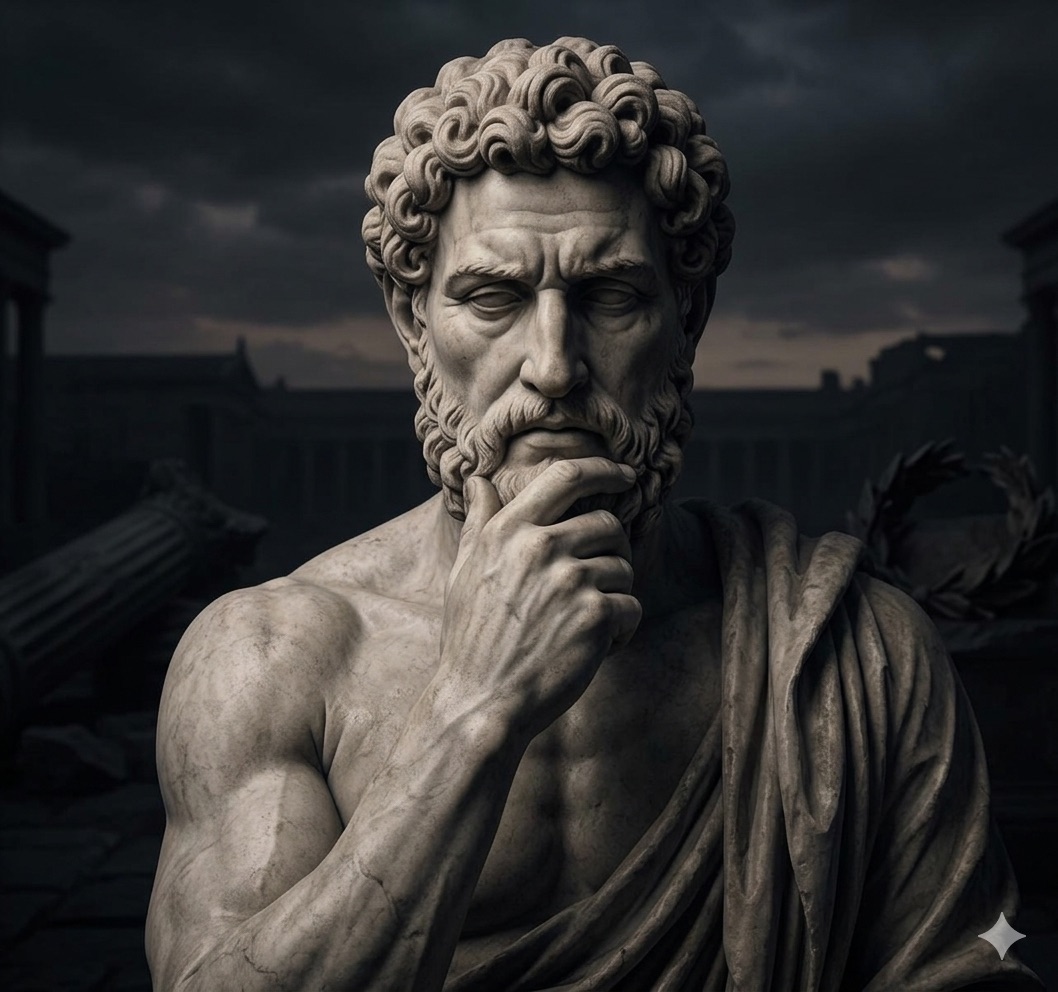

Welcome, friends, to Stoicism Secrets. Today, let’s chat about something we all think about: money. We’re going to explore what a very wise old Stoic, Seneca, had to say about it. You might be surprised.
Imagine you’re building a sandcastle. You need a bucket and a shovel, right? Those are tools. Money, for Seneca, is a lot like that. It’s a tool.
It can be useful. It can help you do things. But it’s not the sandcastle itself. It’s not the most important thing.
Seneca wasn’t saying money is bad. Not at all. He just wanted us to understand its true place. It’s not our master.
It’s something we use. That’s it.
Money for Good Deeds
Think about how money can help. You can buy food. You can buy clothes. You can pay for a safe home. These are good things.
Seneca knew this. He himself was a very wealthy man. He saw money’s power to do good.
You could help a friend. You could support your family. You could even help your community. These are all positive uses of money.
So, money isn’t evil. It’s how we use it that matters.
But Don’t Get Attached
Here’s the tricky part. It’s easy to get attached to our tools. Imagine loving your shovel more than the sandcastle. That would be silly, right?
Seneca warned against this. Don’t let money own you. Don’t let it become your whole world.
If you lose your money, would you lose your happiness? The Stoics believed your happiness should come from inside you. Not from outside things.
This idea is key to understanding Stoicism and money.
In exploring how Seneca viewed wealth and money, it’s interesting to consider the broader implications of Stoic philosophy on personal conduct and emotional resilience. A related article that delves into the Stoic approach to maintaining composure in the face of disrespect is available at this link: The Stoic Rule for Staying Calm When People Disrespect You. This article complements Seneca’s teachings by highlighting the importance of inner peace and self-control, which are essential when navigating the complexities of wealth and interpersonal relationships.
The Danger of Desire: Always Wanting More
Have you ever gotten a new toy, played with it for a bit, and then started wanting another one? Kids do this. Adults do it too, especially with money.
We get a little money. Then we want more. We get a promotion. Then we want the next one. It’s a never-ending cycle.
Seneca saw this clearly. He called it “insatiable desire.” It means you can never get enough.
It’s like trying to fill a bucket with a hole in the bottom. You can pour and pour, but it never gets full.
Chasing the Next Dollar
Imagine someone who works all the time. They miss family dinners. They miss seeing friends. They are always stressed.
Why? Because they are chasing the next dollar. They think “just a little more” will make them happy.
But it rarely does. They get the “little more,” and then they want “even more.” It’s a treadmill.
Seneca wanted us to step off that treadmill. He wanted us to find peace.
The Problem with Comparison
We often look at what others have. “Oh, my neighbor has a fancier car.” “My friend has a bigger house.” This makes us feel like we need more.
This is a trap. Comparing ourselves to others makes us unhappy. There will always be someone with more.
Seneca encouraged us to look inward. What do we truly need? What makes us happy, from the inside?
Not what our neighbor has. Not what the advertisements tell us.
True Richness: Inner Wealth, Not Outer Possessions

What does it mean to be truly rich? Is it having a huge bank account? A fancy car? A big house?
Seneca would say no. True richness comes from within. It’s about your character. It’s about your peace of mind.
This is a big Stoic idea. Your inner world is what truly matters.
Not Needing Much
Think about what truly makes you happy. Is it a quiet walk in nature? A good conversation with a friend? Reading a good book?
These things don’t cost a lot of money. They don’t require fancy possessions.
Seneca believed that the less you need, the richer you are. If you can be happy with simple things, you are truly free.
You don’t rely on outside things for your joy. Your joy comes from within.
Being Content with Enough
Imagine you have enough food. You have a safe place to sleep. You have clothes to wear. Isn’t that enough?
For Seneca, it often was. He wasn’t saying to live in poverty. But he was saying to appreciate what you do have.
Be content with “enough.” Don’t always chase “more.” This takes a lot of pressure off.
It allows you to enjoy life. It allows you to be present.
Training Your Mind
This idea of inner wealth isn’t just wishful thinking. It’s something you practice. It’s like training your mind.
You train your mind to focus on what you have, not what you lack.
You train your mind to find joy in simple things. You train your mind to be grateful.
This mental training is a core part of Stoicism. It’s how you build true inner richness.
Mastering Indifference: Money is a Preferred Indifferent

This sounds a bit technical, but it’s actually quite simple. The Stoics had a way of looking at things.
Some things are “good.” These are things like virtue, wisdom, kindness. These are always good.
Some things are “bad.” These are things like vice, ignorance, cruelty. These are always bad.
Then there’s a big category in the middle: “indifferents.” These are things that are neither good nor bad in themselves.
Money is in this middle group. It’s an “indifferent.”
What’s a “Preferred” Indifferent?
Okay, so money isn’t good or bad. But it’s clearly better to have money than not to have it, right?
The Stoics agreed. They called money a “preferred indifferent.” It’s something you’d generally prefer to have.
It’s helpful. It makes life easier. It can be used for good.
But here’s the crucial point: it doesn’t add to your moral goodness. And its absence doesn’t take away from it.
Your Character Stays the Same
If you have a lot of money, you’re not automatically a better person. If you have no money, you’re not automatically a worse person.
Your character, your virtue, your wisdom – these are separate from your bank account.
This is what “indifferent” means. Money doesn’t define your true self.
It’s like having a nice car. It might be preferred. It might be convenient. But it doesn’t make you a better driver or a better person.
Ready to Let Go
Since money is an indifferent, Seneca also taught us to be ready to lose it.
If you gain money, that’s fine. If you lose money, that’s fine too. Your inner peace shouldn’t depend on it.
This doesn’t mean being careless with money. It means not being emotionally tied to it.
It’s about having an internal freedom. You can enjoy money when you have it. But you won’t suffer if it’s gone.
This level of detachment is a hallmark of Stoic living.
In exploring how Seneca viewed wealth and money, it is intriguing to consider the broader Stoic perspective on life’s challenges, including failure. A related article discusses the Stoic approach to failure and how it can provide valuable insights into managing our perceptions of success and material wealth. By understanding that external circumstances do not define our worth, we can better appreciate Seneca’s teachings. For more on this topic, you can read the article on the Stoic approach to failure here.
Using Money Wisely: Benevolence and Generosity
| Aspect | View |
|---|---|
| Wealth | Seen as a means to an end, not an end in itself |
| Money | Considered as a tool for living a virtuous life |
| Riches | Emphasized the importance of using wealth for the benefit of others |
| Contentment | Believed in finding contentment through inner virtue rather than external wealth |
So, if money is just a tool, and we shouldn’t be attached to it, what should we do with it?
Seneca had clear ideas here. He believed in using wealth for good. He was a big fan of generosity.
If you have more than you need, use it to help others. Share your resources.
This isn’t just about charity, though that’s part of it. It’s about how you approach wealth itself.
Helping Others, Not Showing Off
Imagine someone who buys a huge expensive car just to impress people. That’s not Stoic.
Now imagine someone who uses their money to support a local food bank. Or to help a friend in need. That’s Stoic.
Seneca encouraged “benevolence.” This means kindness and generosity.
Use your money to make a positive impact. Not to feed your ego.
The Joy of Giving
Interestingly, Seneca believed that giving money away brought more joy than keeping it.
When you help someone, you feel good, right? You feel connected. You feel like you’ve made a difference.
This kind of joy is much deeper and longer-lasting than the fleeting thrill of buying something new.
It’s another way to build that inner richness we talked about.
Simplicity and Prudence
Being generous doesn’t mean spending foolishly. Seneca also valued prudence.
Live simply. Don’t be wasteful. Make smart choices with your resources.
This isn’t about being stingy. It’s about being mindful.
It’s about understanding that money has a purpose. And that purpose is often best served when used thoughtfully.
So, while having wealth is a “preferred indifferent,” how you manage and use it reflects your Stoic values. Be wise. Be kind.
In exploring how Seneca viewed wealth and money, it is interesting to consider the broader philosophical context, particularly in relation to minimalism. A related article discusses the distinctions and similarities between Stoicism and minimalism, shedding light on how both philosophies approach the concept of material possessions and personal fulfillment. You can read more about this intriguing comparison in the article on Stoicism vs. Minimalism. This connection enriches our understanding of Seneca’s teachings and their relevance in today’s world.
Conclusion: A Balanced View of Money
So, what did Seneca teach us about money? He didn’t tell us to be poor. He didn’t tell us to be rich.
He told us to be wise.
Money is a tool. It’s useful. But it’s not the goal itself. Don’t let it control you.
Don’t constantly desire more. Learn to be content with enough. Find your true wealth inside yourself.
Understand that money doesn’t make you a better person. Your character does.
And if you have it, use it well. Be generous. Be prudent.
This Stoic perspective on money helps us live a calmer, happier life. It frees us from endless wanting. It helps us focus on what truly matters: our peace, our kindness, and our wisdom. Thanks for joining us on Stoicism Secrets.