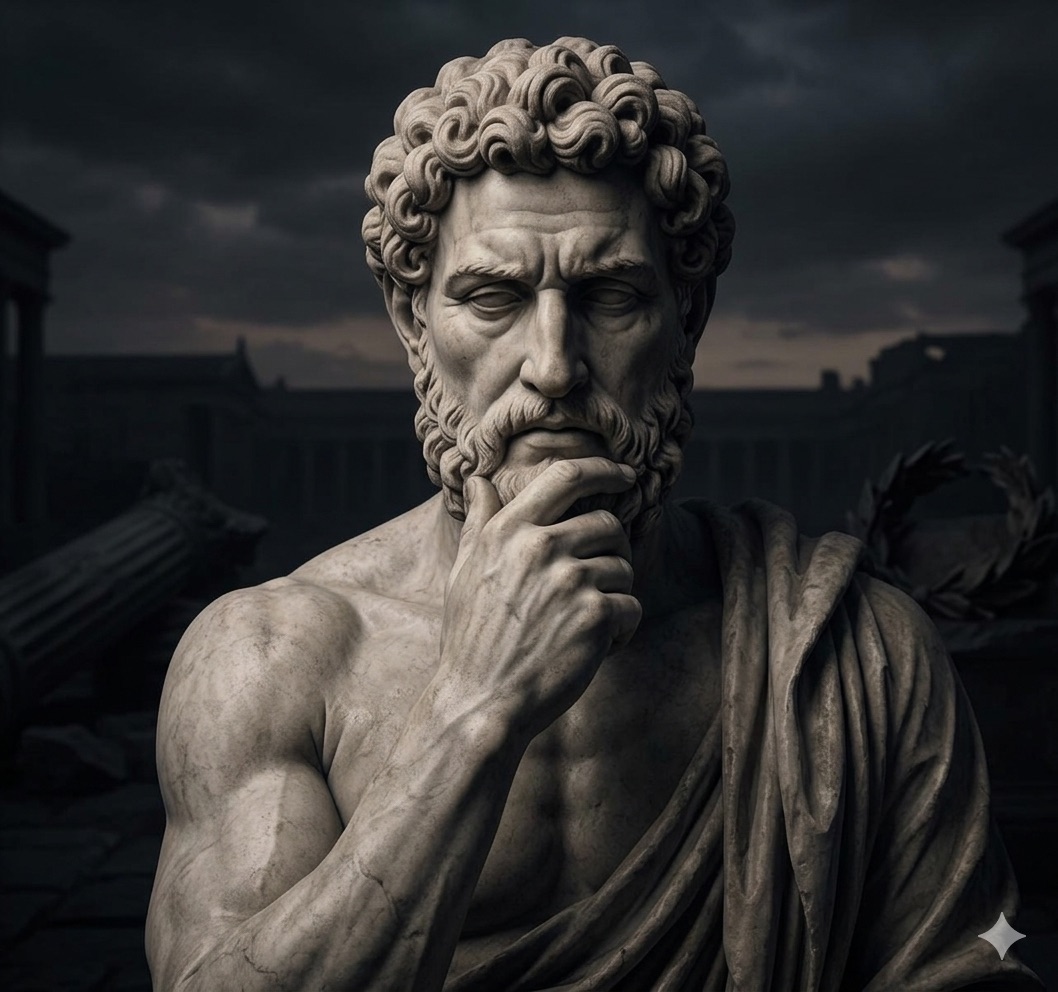

Hey there. Ever feel like life just keeps throwing curveballs? Or like you get knocked down and it’s hard to get back up? We all do. It’s part of being human. But what if there was a way to bounce back faster? To feel stronger inside, no matter what happens outside? That’s what we’re exploring today: Building Resilience with Stoicism.
Stoicism is an ancient wisdom. It’s not about being emotionless. It’s about building inner strength. It helps us deal with bumps in the road. It helps us stand tall. Let’s dive in.
Understanding Resilience
What is resilience, anyway?
It’s like a spring. When you push it down, it pops back up.
It’s the ability to recover from difficulties.
It’s about adapting to change.
It’s about facing stress and growing from it.
We all want more of it. Stoicism shows us how.
In exploring the principles of Stoicism and its impact on resilience, you may find the article “Mastering Stoicism: Winning Without Needing Validation” particularly insightful. This piece delves into how Stoic philosophy encourages individuals to cultivate inner strength and self-sufficiency, which are essential components of resilience. By understanding the importance of self-validation and detaching from external approval, readers can enhance their ability to face challenges with a fortified mindset. To read more about this transformative approach, visit Mastering Stoicism: Winning Without Needing Validation.
Focusing on What You Control
This is a big one in Stoicism. It’s called the Dichotomy of Control.
Some things are up to us. Our thoughts. Our actions. Our choices.
Other things are not up to us. The weather. Other people’s opinions. Traffic.
Big life events. These are often outside our control.
The Power is Yours
Think about a bad grade on a test.
You can’t control the grade itself. It’s already there.
But you can control your reaction.
You can choose to get upset and give up. Or you can learn from it.
You can study harder next time. You can ask for help.
That’s focusing on what you control. Your effort. Your attitude.
Letting Go of the Rest
Worrying about things you can’t control is like trying to stop the rain.
It’s pointless. It drains your energy.
Imagine you’re stuck in traffic.
You can’t make the cars move faster.
You can choose to listen to a podcast. Or take deep breaths.
You can choose not to get angry.
This doesn’t mean you don’t care. It means you use your energy wisely.
You put your focus where it can actually make a difference.
This practice builds inner peace. It helps you stay calm. This is key for Building Resilience with Stoicism.
Embracing Obstacles as Opportunities
Life isn’t always smooth sailing. Challenges will come.
Stoics don’t shy away from this. They expect it.
And they see these challenges differently.
They see them as chances to get stronger.
The Obstacle is the Way
Think about lifting weights.
You lift a heavy weight. It’s hard. It’s uncomfortable.
But your muscles grow stronger.
Life’s difficulties are like those weights.
They test us. They push us.
And if we face them head-on, we grow.
We build mental muscle.
Learning from Setbacks
Imagine you try a new recipe. It fails spectacularly.
You could feel defeated. Or you could ask: “What went wrong?”
Maybe you used too much salt. Maybe the oven was too hot.
You learn something new. You get better for next time.
Every mistake is a lesson.
Every obstacle is a teacher.
This mindset makes you tougher. It makes you more resilient.
It helps you adapt.
Practicing Negative Visualization
This sounds a bit scary, right? Like thinking about bad things.
But it’s not about dwelling on negativity. It’s about being prepared.
It’s a powerful Stoic tool.
Appreciating What You Have
Here’s how it works.
Sometimes, we take things for granted. Our health. Our friends. Our job.
Imagine for a moment losing something you care about.
Not to punish yourself. But to awaken appreciation.
Think about your phone. How often do you just use it without thinking?
Now, imagine it’s gone. Lost forever.
Suddenly, you might appreciate having it.
You realize how much it helps you.
Preparing for the Worst, Hoping for the Best
This practice helps in two ways.
First, it makes you grateful for what you have right now.
It makes you happier in your daily life.
Second, it prepares you.
If something bad does happen, you’re not completely blindsided.
You’ve thought about it. You’ve considered it.
This doesn’t mean you expect bad things.
It means you build mental readiness.
It’s like a fighter training. They prepare for different punches.
They don’t expect to get hit. But they are ready if they do.
This mental preparation builds incredible resilience.
In exploring the profound impact of Stoicism on personal resilience, it’s insightful to consider how this ancient philosophy also aids in managing emotional responses. For those interested in learning more about this aspect, a related article discusses how Stoicism can help you stop overreacting, providing practical strategies to cultivate a more balanced emotional state. You can read it here: how Stoicism helps you stop overreacting. By integrating these principles, individuals can enhance their ability to face challenges with a calm and composed mindset.
Embracing Discomfort and Voluntary Hardship
Most of us love comfort. Soft beds. Warm drinks. Easy paths.
Stoics suggest we sometimes step away from comfort.
Not to suffer pointlessly. But to toughen ourselves up.
Stepping Out of Your Comfort Zone
Think about taking a cold shower.
Brrr! It’s uncomfortable at first.
But you get through it. And you feel refreshed.
You prove to yourself you can handle it.
You don’t need a hot shower.
Maybe you try eating a simple, plain meal sometimes.
Or walking instead of driving a short distance.
These small acts of voluntary discomfort are powerful.
Building Inner Strength
Why do this?
It breaks our attachment to comfort.
We realize we don’t need all the luxuries we think we do.
We become less afraid of discomfort.
This makes us stronger.
When a difficult situation comes along, we are more prepared.
We’ve practiced being a little uncomfortable.
So, a big discomfort doesn’t feel so overwhelming.
It strengthens our inner resolve.
This is another practical way for Building Resilience with Stoicism.
The Importance of Reflection and Journaling
Stoics were big on thinking. On looking inside.
They used tools to do this. One main tool was journaling.
Not just writing about what happened. But why it happened.
And how they reacted.
The Evening Review
At the end of the day, take a few minutes.
Think about your day.
What went well?
What didn’t go so well?
How did you react to challenges?
Did you act in line with your values?
For example, if someone cut you off in traffic.
Did you get angry? Or did you let it go?
If you got angry, what could you do differently next time?
This isn’t about judging yourself harshly.
It’s about learning. It’s about improving.
Writing It Down
Writing things down makes them clearer.
It helps you examine your thoughts.
It helps you see patterns.
Maybe you always get stressed about public speaking.
Journaling can help you uncover why.
What are you truly afraid of?
Then you can start to address it.
This practice is like having a wise coach always by your side.
It helps you understand yourself better.
It helps you choose better reactions.
It makes you more aware.
And self-awareness is a huge part of resilience.
Living with Virtue
Stoicism isn’t just about coping. It’s about living a good life.
A life guided by virtue.
What are virtues?
Things like wisdom, courage, justice, and temperance.
These are inner qualities.
They are always within our control.
Wisdom: Seeing Clearly
Wisdom is about seeing things as they really are.
Not as we wish they were.
Understanding what’s important.
Understanding what’s worth spending our energy on.
It helps us make good choices.
Wise choices lead to fewer regrets.
Fewer regrets mean less internal conflict.
This builds stability and resilience.
Courage: Facing Fear
Courage is not the absence of fear.
It’s acting rightly despite fear.
It’s standing up for what’s right.
It’s taking steps toward a goal, even if it’s hard.
When you act with courage, you build self-trust.
You prove to yourself that you can face tough things.
This is a huge shot in the arm for your resilience.
Justice: Treating Others Well
Justice is about fairness.
Treating all people with respect.
Doing the right thing, even when no one is watching.
When our actions are fair and kind, we live with integrity.
This creates inner peace.
And inner peace makes us strong.
It prevents the draining feeling of guilt or remorse.
Temperance: Self-Control
Temperance is about moderating our desires.
It’s about having self-control.
Not letting our impulses rule us.
It’s about balance.
Eating healthy. Not overreacting to small annoyances.
When we practice temperance, we are the masters of ourselves.
We aren’t tossed around by every craving or emotion.
This builds incredible inner fortitude.
It helps us stay steady, no matter the storm.
The Power of Acceptance
There’s a famous prayer. “Grant me the serenity to accept the things I cannot change, the courage to change the things I can, and the wisdom to know the difference.”
This is very Stoic.
Acceptance is not resignation. It’s not giving up.
It’s acknowledging reality.
It’s saying, “This is what is.”
Acknowledging Reality
Imagine you missed your flight.
You can rant and rave. You can get angry.
But the flight is gone. That’s the reality.
Accepting it means you can then move on.
You can look for the next flight. You can make a new plan.
Fighting reality only makes you suffer more.
Acceptance frees up your energy.
It allows you to focus on solutions.
This leads directly to Building Resilience with Stoicism.
Finding Peace in What Is
This doesn’t mean you have to like everything that happens.
It just means you acknowledge it.
You accept that some things are beyond your control.
This brings a profound sense of peace.
It allows you to conserve your emotional resources.
So when truly tough things happen, you have energy to face them.
Final Thoughts on Building Resilience with Stoicism
Life will always have its ups and downs. That’s a given.
But how we move through them – that’s where Stoicism comes in.
It’s about building an inner fortress.
A strong, calm inner self that can handle anything.
Remember, it’s not about being emotionless.
It’s about being thoughtful. Being prepared.
It’s about choosing your response.
Start small. Pick one idea from above.
Focus on what you control.
Or try an evening reflection.
With each small step, you’re Building Resilience with Stoicism.
You’re becoming stronger. You’re becoming calmer.
You’re building a better you, for whatever comes your way.