

Life can feel pretty wild sometimes, right? One minute things are great, the next, bam, something flips. It’s easy to feel like we’re just tossed around by whatever comes our way. But what if there was a way to feel a bit more steady, no matter what’s happening? That’s where Stoicism comes in. It’s this ancient way of thinking that’s suddenly making a lot of sense to people today. Let’s see why.
Look around. There’s so much happening all the time. News flashes. Social media buzzes. Life throws curveballs at work, at home, everywhere. It’s a lot to take in.
And it’s easy to feel like you’re drowning in it all. Like you can’t possibly handle it. This feeling is super common.
The Modern Rush
We’re always busy. Always rushing. Always trying to keep up. It feels like there’s no time to just breathe.
So many things demand our attention. Phones ping. Emails pile up. We feel pulled in a million directions.
Our Worries Keep Growing
We worry about the future. We replay mistakes from the past. We get anxious about what others think.
These worries can feel like heavy weights. They can make us feel stuck and unhappy.
As the principles of Stoicism gain renewed interest in today’s fast-paced world, many are seeking practical applications of its teachings to navigate life’s challenges. A related article that delves into this theme is “The Stoic Way to Stay Mentally Strong When Life Feels Unfair,” which explores how Stoic philosophy can provide valuable tools for resilience and emotional strength. You can read more about it here: The Stoic Way to Stay Mentally Strong When Life Feels Unfair. This article complements the discussion on why Stoicism is becoming popular again by offering actionable insights for those looking to cultivate a more resilient mindset.
What Is This “Stoicism” Thing?
You might have heard the word “Stoic.” It often means someone who doesn’t show their feelings. But that’s not exactly what Stoicism is all about.
Back in ancient Greece, people like Zeno, Epictetus, Seneca, and Marcus Aurelius thought deeply about how to live a good life. They came up with some really useful ideas.
Not About Being Cold
Stoicism isn’t about being a robot. It’s about understanding what you can control and what you can’t. And then focusing your energy wisely.
Think of it like playing a game. Some things are up to luck. Others are up to how you play your cards.
Ancient Wisdom for Today
These old ideas are suddenly popular because they offer real solutions to modern problems. They help us find calm in chaos.
They teach us how to be stronger inside. How to be happier with less. How to deal with tough times.
Focusing on What You Can Control
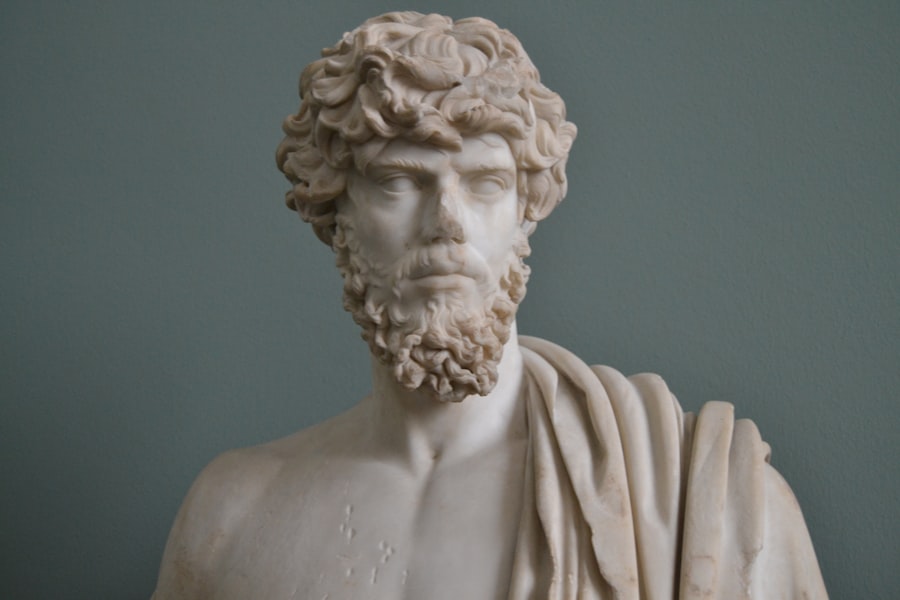
This is a big one in Stoicism. Epictetus, a former slave, said we should all remember this. He called it the “dichotomy of control.”
Some things are within your power. Others are outside your power.
What’s Totally Yours?
Your thoughts are yours. Your judgments are yours. Your desires and your actions are yours. You decide these things.
How you react to something is in your hands. What you believe is in your hands. This is your inner world.
What’s Not Yours?
The weather is not yours to command. Other people’s opinions are not yours to decide. Your health can sometimes be tricky.
Fame, money, your job title, what happens in the world – these are often outside your direct control.
Why This Matters So Much
When you spend all your energy worrying about things you can’t change, you waste your energy. You just get frustrated.
But when you focus on your own thoughts and actions, you become powerful. You can make progress. You can feel better.
Example: Stuck in Traffic
You’re in traffic. You can’t move the cars. That’s outside your control.
What is in your control? How you feel about it. You can get angry. Or you can listen to a podcast. You can plan your day. You can choose peace.
Example: Someone is Rude
Someone is mean to you. You can’t control their meanness. That’s their issue.
What you can control is how you respond. You can be mean back. Or you can choose not to let it ruin your day. You can try to understand why they’re like that.
Dealing With Difficult Emotions
Life isn’t always sunshine and rainbows. We all feel sad, angry, jealous, or scared sometimes. Stoicism doesn’t tell us to ignore these feelings.
It teaches us how to understand them. And how to not let them rule us.
Emotions Come and Go
Think of emotions like clouds. They appear, they drift by, and then they pass. They don’t have to stay forever.
Stoics believed strong emotions often come from wrong judgments. We think something is terrible when it’s just inconvenient.
Asking “Is This Really That Bad?”
When you feel upset, Stoics would ask you to question your thinking. Is this truly the worst thing that could happen?
Often, we make things seem much worse than they are. We catastrophize.
Example: A Bad Grade
You get a bad grade on a test. It feels awful. But is it the end of the world?
Probably not. It’s a chance to study harder next time. It’s a lesson learned. It doesn’t define your whole worth.
Example: Losing Your Job
Losing a job is tough. It’s okay to feel sad and worried.
But can you frame it differently? Maybe it’s a chance to find a job you like even more. Maybe it’s an opportunity for a new path.
Practicing “Negative Visualization”
This sounds a bit gloomy, but it’s really useful. Stoics would imagine losing things they value. They’d think about what could go wrong.
This isn’t to make you miserable. It’s to make you appreciate what you have. And to prepare you for hardship.
Imagine Losing Your Phone
Imagine your phone is lost or broken. How would you feel?
Now imagine it’s still in your pocket. See? You feel a little relieved, right? This practice helps you not take things for granted. It makes you more resilient.
As the principles of Stoicism gain traction in modern society, many are exploring its teachings to navigate the complexities of daily life. A particularly insightful article discusses how to maintain composure in the face of disrespect, highlighting a key Stoic rule that can help individuals remain calm and centered. For those interested in this topic, you can read more about it in the article on staying calm when faced with disrespect. This connection between ancient wisdom and contemporary challenges is a testament to the enduring relevance of Stoic philosophy.
The Importance of Virtue
| Reasons | Metrics |
|---|---|
| Increase in Mental Health Awareness | Rise in searches for stoicism and mental health |
| Focus on Resilience and Mindfulness | Number of stoicism-related books sold |
| Emphasis on Personal Growth and Self-Improvement | Number of stoicism-related podcasts and online communities |
| Application in Business and Leadership | Number of corporate workshops and seminars on stoicism |
Stoics believed the one truly good thing is virtue. Virtue means things like wisdom, justice, courage, and temperance.
Everything else – health, wealth, reputation – are “indifferents.” They can be used for good or bad. But they aren’t good or bad in themselves.
What Are These Virtues?
- Wisdom: Knowing what is good, what is bad, and what is indifferent. Thinking clearly.
- Justice: Treating others fairly. Being honest and kind.
- Courage: Facing difficulties with bravery. Not being afraid to do what’s right.
- Temperance: Having self-control. Not giving in to excess.
Why Virtue is Key
If you are wise, just, courageous, and temperate, you are living a good life. You are being the best version of yourself.
External things can be taken away. But your character, your virtues, can’t. They are your inner strength.
Example: Being a Good Friend
A good friend is virtuous. They are loyal (justice), they offer good advice (wisdom), they stand by you through tough times (courage), and they don’t gossip or betray trust (temperance).
These actions make you a good person, regardless of how much money you have or what job you do.
Example: Handling a Conflict
If you face a conflict, you can use your virtues. You can use wisdom to understand the situation. You can use justice to seek a fair solution. You can use courage to speak up respectfully. You can use temperance to avoid saying things you’ll regret.
Finding Contentment in Simplicity
In our world of endless wanting, Stoicism offers a path to peace. It suggests that true happiness doesn’t come from having more.
It comes from wanting less, and appreciating what you have.
The Problem With “More”
We’re often told we need more. More stuff. More likes. More success. This cycle can never truly satisfy us.
As soon as we get something new, we start wanting the next thing. It’s a treadmill of desire.
Appreciating What You Have
Stoicism encourages us to pause and look at our lives. What do we already have?
Think about your friends. Your family. A safe place to sleep. Food to eat. These are precious.
Example: Your Morning Coffee
That morning cup of coffee. It’s simple. But it’s a moment of comfort. A small pleasure. Stoics would tell you to really savor it. Think about where it came from, how it feels to drink it.
Example: A Walk in the Park
A walk in nature. The sun on your face. The sound of birds. These are free joys. We often overlook them because they aren’t flashy.
Practicing Gratitude
This is a core Stoic practice. Regularly thinking about what you’re thankful for. It shifts your focus from what’s missing to what’s present.
Gratitude is a powerful antidote to dissatisfaction.
Why It Resonates Now
So, why are people turning to Stoicism today? It’s because the world feels a bit unsteady. And Stoicism offers a way to find your footing.
We’re bombarded with information. We deal with constant change. We face uncertainty.
A Stable Inner Life
Stoicism provides tools to build a stable inner life. A life that’s less affected by external storms. It’s about inner strength.
It teaches you to be calm when others are panicking. To be steady when things are shaky.
Practical Tools for Modern Living
These ancient ideas are not abstract theories. They are practical guides. They offer actionable steps.
You can use them daily to navigate your challenges. To make better decisions. To feel more in control of yourself.
The Appeal of Self-Reliance
In a world where we often feel dependent on things outside ourselves, Stoicism emphasizes self-reliance. It empowers you.
It shows you that you have more power than you think. The power is within you.
Example: Social Media Pressure
Social media can make us feel pressured. We compare ourselves. We feel inadequate. Stoicism helps us remember that our worth isn’t tied to likes. It’s about our character.
Example: Economic Uncertainty
When the economy is rough, we might feel anxious. Stoicism reminds us that while we can’t control the economy, we can control our response. We can be disciplined with our finances. We can be adaptable.
A Path to Resilience
Stoicism isn’t about being tough in your feelings. It’s about being tough in your actions and outlook. It’s about building resilience.
Resilience is like a strong tree. It can bend in the wind, but it doesn’t break.
Bouncing Back
When bad things happen, Stoicism helps you bounce back. It gives you the mental tools to recover. To learn from your mistakes. To move forward.
It teaches you that you are stronger than you know. And that challenges can be opportunities for growth.
Living a Meaningful Life
Ultimately, Stoicism is about living a good and meaningful life. It’s about being a good person. And being at peace with yourself.
It’s a philosophy for everyday living. A way to find your inner compass.
Finding Your Own Calm
Stoicism offers a calm presence in a chaotic world. It’s an invitation to look inward. To understand yourself better. And to build a life of purpose and peace. It’s not about grand gestures or complicated theories. It’s about simple, daily practices. That’s why it’s becoming popular again. It just makes sense.
FAQs
What is Stoicism?
Stoicism is a philosophy that originated in ancient Greece, founded by Zeno of Citium in the early 3rd century BC. It emphasizes the development of self-control and fortitude as a means of overcoming destructive emotions and achieving a state of inner peace.
Why is Stoicism becoming popular again?
Stoicism is experiencing a resurgence in popularity due to its practical and timeless teachings that offer guidance on how to navigate the complexities of modern life. Many people are finding value in its emphasis on personal responsibility, resilience, and focus on what is within our control.
How does Stoicism differ from other philosophies?
Stoicism differs from other philosophies in its emphasis on the importance of maintaining a sense of inner calm and tranquility, regardless of external circumstances. It also places a strong emphasis on the development of virtue and living in accordance with nature.
What are some key Stoic principles?
Some key Stoic principles include the practice of self-discipline, the acceptance of what is beyond our control, the cultivation of gratitude, and the pursuit of wisdom. Stoicism also encourages individuals to focus on their own actions and attitudes rather than external events.
How can one apply Stoic principles in daily life?
One can apply Stoic principles in daily life by practicing mindfulness, reframing challenges as opportunities for growth, and cultivating a mindset of resilience and gratitude. Additionally, individuals can apply Stoic principles by focusing on their own actions and responses to external events.
