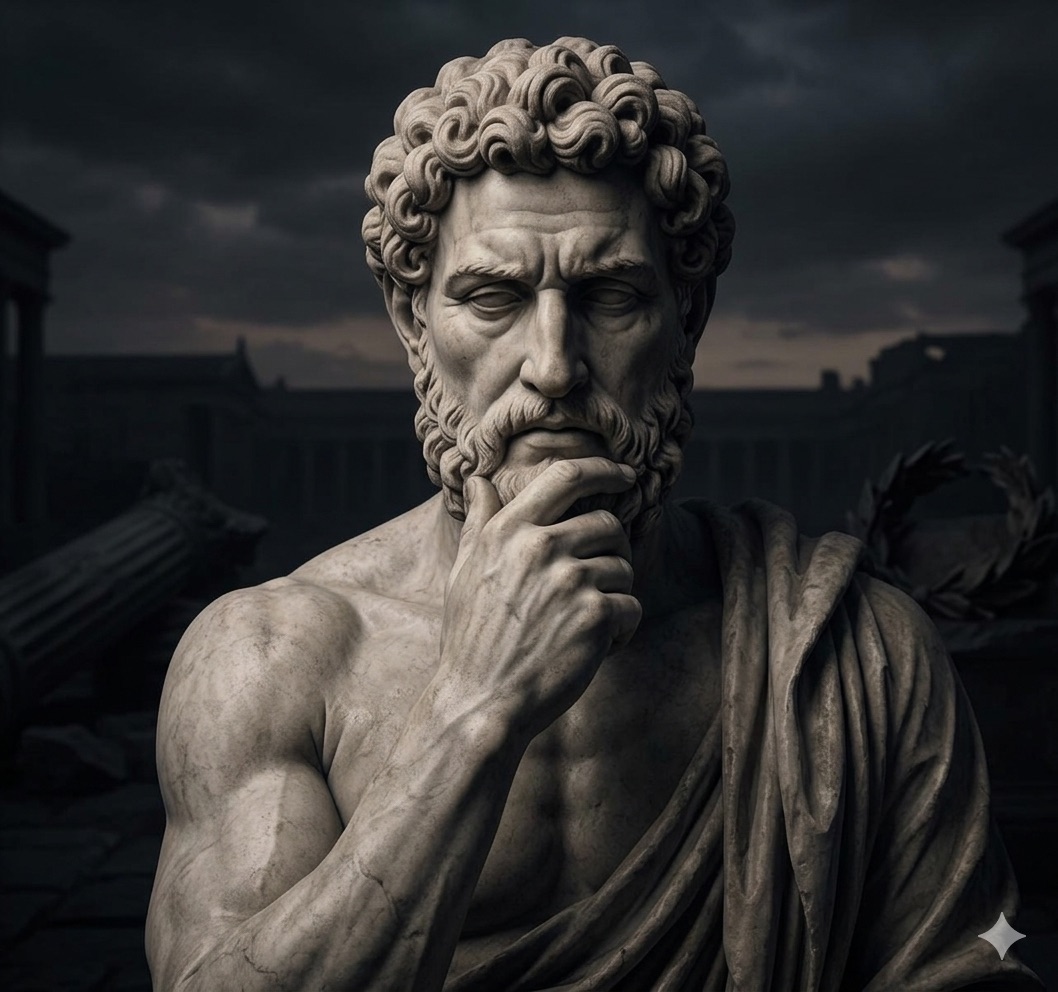

Fear and anxiety can feel like heavy blankets. They can make us freeze. They can make us feel small. But there are ways to lift those blankets. Seneca, a wise Roman philosopher, had some great ideas about this. He lived a long time ago. But his thoughts are still super helpful today. Let’s look at what he taught us about facing our fears.
Seneca thought a lot about fear. He saw that sometimes our fears are like ghosts. They aren’t real dangers. They are just shadows in our minds.
Imaginary Dangers vs. Real Ones
Think about a scary movie. The monster isn’t really going to jump out of the screen, right? Our minds can play tricks like that. We imagine all sorts of bad things happening. These imagined bad things often feel as real as actual bad things.
The Power of Our Thoughts
Seneca believed our thoughts have a lot of power. We can choose what we think about. This is a big deal. Our thoughts can make us feel scared or brave. It’s like having a remote control for our feelings.
In exploring the insights of Seneca on fear and anxiety, it is also valuable to consider how to maintain resilience in the face of life’s challenges. A related article that delves into this topic is “How to Stay Strong When Life Feels Unfair,” which offers practical strategies for coping with adversity and maintaining mental strength. You can read more about it here: How to Stay Strong When Life Feels Unfair. This article complements Seneca’s teachings by providing actionable advice for navigating difficult circumstances with fortitude.
Worrying About the Future
Much of our anxiety comes from worrying about what might happen. We play out the worst-case scenarios in our heads. Seneca said this is a waste of time.
The Torment of Anticipation
Seneca wrote that we suffer more in our imagination than in reality. When we worry about something, we are already hurting ourselves. We are feeling the pain before the actual event even happens.
Example: The Job Interview
Imagine you have a big job interview. You might start stressing for days. You think about messing up answers. You imagine the interviewer looking disappointed. You feel the anxiety now. But the interview hasn’t even happened yet.
The Future is Uncertain
We can’t actually control the future. It’s like playing a game with rules we don’t know. Trying to guess every move is exhausting. And it’s usually wrong.
Facing What We Fear

Seneca didn’t tell us to ignore our fears. He said we should look at them directly. It’s like shining a flashlight into a dark corner.
Looking Fear in the Eye
When we are afraid, our first instinct is to run away. But Seneca suggested the opposite. He said to stand still and observe. What is this fear? Is it a real threat?
What Can Actually Harm Us?
Think about what truly matters. Losing a little bit of money is upsetting. But is it truly harmful to your well-being? Losing your health or your character is different. Seneca wanted us to focus on the things that really count.
The Illusion of Control
We often feel anxious because we believe we should have control over everything. We want to control outcomes. We want to control what other people think. But this is impossible.
Practicing Presence

Being in the present moment is a powerful way to calm anxiety. When we focus on what’s happening right now, the future worries fade.
The Only Time We Have is Now
Seneca reminded people that the present is all we truly have. The past is gone. The future is unknown. Our focus should be on this moment.
Simple Exercise: Notice Your Breath
Take a moment right now. Just notice your breath. Feel it going in. Feel it going out. This brings you back to the present. It’s a simple anchor.
Mindfulness and Stoicism
This idea is a lot like what people call mindfulness today. It’s about paying attention to the here and now. Without judging it.
In exploring the insights of Seneca on fear and anxiety, one can also benefit from understanding the broader Stoic philosophy, which emphasizes the importance of virtue over fleeting happiness. A related article discusses how embracing virtue can lead to a more fulfilling life, providing practical guidance on applying these timeless principles. For those interested in deepening their understanding of Stoicism, this article can be found here: the Stoic approach to fulfillment.
Preparing for the Worst (Realistically)
| Fear and Anxiety | Seneca’s Perspective |
|---|---|
| Definition | Seneca defines fear as a projection into the future, a mental construct that does not exist in the present moment. Anxiety, on the other hand, is the result of focusing on potential future events and outcomes. |
| Impact | Seneca believes that fear and anxiety can paralyze individuals, preventing them from living in the present and taking action towards their goals. |
| Solution | Seneca suggests that individuals should focus on the present moment, accept the uncertainty of the future, and cultivate inner resilience to overcome fear and anxiety. |
| Quotes | “We suffer more often in imagination than in reality.” – Seneca |
Seneca didn’t say to be passive. He said to be prepared. But prepare wisely. Not with endless worry.
Preparing for Difficulties
Instead of imagining every possible bad thing, Seneca suggested imagining difficulties. Think about what you might face. Then think about how you could handle it.
What If Things Go Wrong?
If you lose your job, what would you do? You’d look for a new one. You’d manage your money. You’d rely on your skills and your friends. This is preparation. It’s not the same as panicking.
Material Possessions Aren’t Everything
We get attached to our things. We get scared of losing them. Seneca pointed out that material things can be lost. They don’t define us. Our character does.
In exploring the wisdom of Seneca on fear and anxiety, one can gain valuable insights into the Stoic mindset that promotes resilience and mental toughness. For a deeper understanding of how these principles can be applied in everyday life, you might find it beneficial to read about the Stoic mindset of mentally tough individuals in this related article. By examining their approaches, you can learn practical strategies to manage your own fears and anxieties more effectively. Check it out here.
Cultivating Inner Resilience
The goal of Stoicism is to build inner strength. This strength helps us deal with whatever life throws at us.
Virtue as the Only Good
For Stoics, the only true good is virtue. This means being wise, just, courageous, and temperate. These things can’t be taken away from you.
Your Character is Your Fortress
Think of your character as a strong castle. No matter what happens outside, your castle can stand firm. This inner strength is the best defense against fear.
Accepting What You Cannot Change
There are many things we cannot change. The weather. Other people’s opinions. Past events. We waste energy fighting these things.
The Serenity Prayer (A Modern Echo)
There’s a modern prayer that echoes this. “God, grant me the serenity to accept the things I cannot change, the courage to change the things I can, and the wisdom to know the difference.” This is very Stoic.
Seneca’s Advice in Everyday Life
Seneca’s wisdom can be applied to your daily struggles with fear and anxiety. It’s not about being emotionless. It’s about being wise.
Small Steps, Big Impact
You don’t have to change overnight. Start with small things. When a fear pops up, ask yourself: “Is this a real danger?”
Practice with Little Annoyances
If you’re stuck in traffic, don’t get angry. Accept it. It’s out of your control. What can you do now? Listen to a podcast. Think. Just be present.
The Power of Reflection
Seneca was a big fan of reflecting at the end of the day. He’d ask himself: “What did I do wrong? What did I do well? What could I have done better?”
Daily Journaling
You can do this too. Keep a small journal. At the end of the day, jot down your thoughts. How did you handle your feelings? What did you learn?
Conclusion: Finding Peace in a Busy World
Fear and anxiety are part of being human. But they don’t have to control us. Seneca’s teachings offer a clear path. They show us how to look at our fears. They teach us to focus on what matters.
Your Inner Strength is Available
You have the power to train your mind. You can learn to be less afraid. You can find more peace. It takes practice. But it is possible.
A Calm Mind is a Strong Mind
By applying these simple Stoic ideas, you can build a calm and resilient mind. A mind that can face life’s challenges with courage and wisdom. Seneca’s secrets are not really secrets. They are just well-worn paths to a more peaceful life.