
Feeling happy all the time? That’s a tough one, right? Life throws all sorts of stuff at us. Good days, bad days, boring days. Sometimes it feels like happiness is a secret code we just can’t crack.
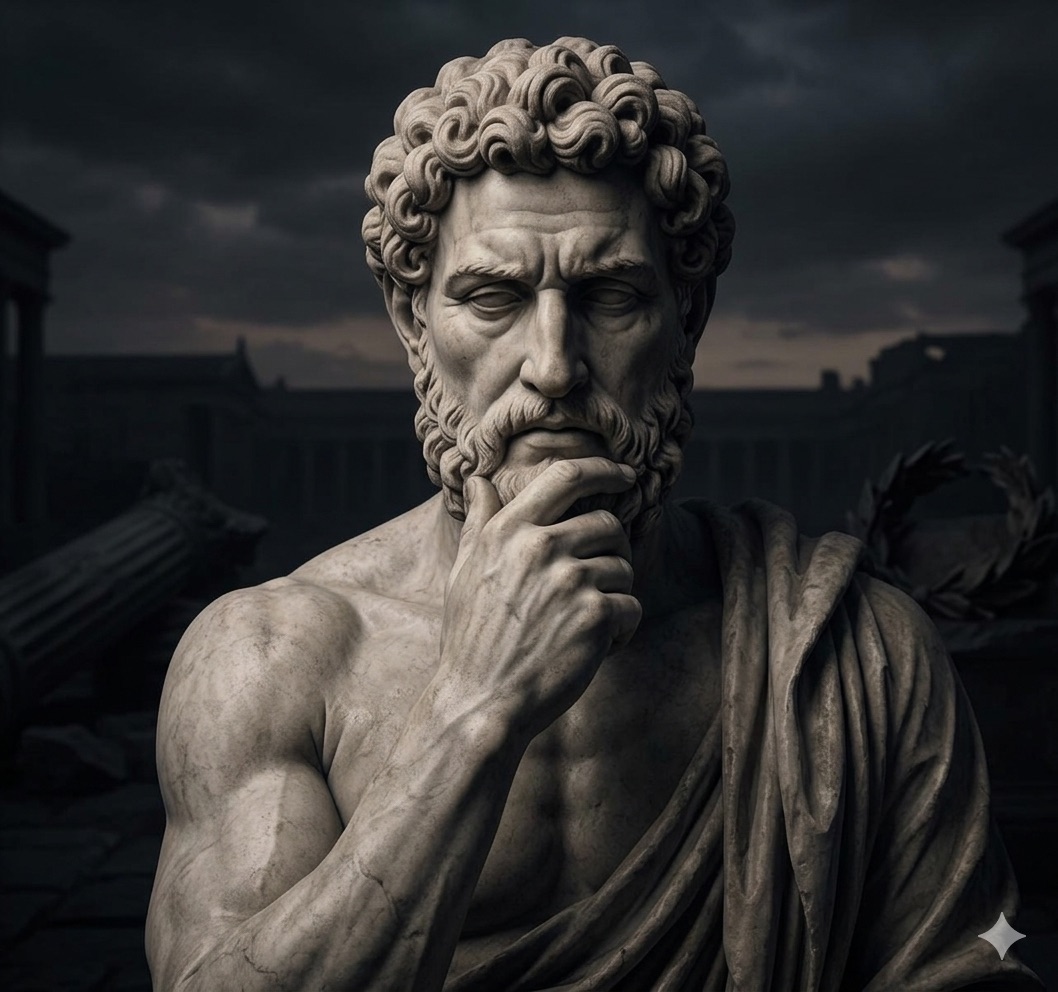
But what if someone hundreds of years ago already figured out some of the answers? Someone wise, powerful, and who saw a lot of life’s ups and downs. That person was Marcus Aurelius. He was a Roman Emperor, a very important guy. But more than that, he was a philosopher, a deep thinker. He wrote a personal diary, now known as Meditations. It wasn’t meant for us to read, but lucky for us, we can. And in those pages are some truly amazing Stoicism secrets about finding peace and contentment, no matter what’s happening around you. Let’s unlock some of his wisdom together.
The Power Within: It’s All About Your Mind
Marcus Aurelius often talked about the power we have over our own minds. He knew that the world outside can be messy. But he believed our inner world is ours to control.
Your Thoughts, Your Choice
Think about it. Two people can be in the exact same difficult situation. One person gets really upset, shouts, and feels terrible. The other person stays calm, thinks things through, and tries to find a solution. What’s the difference? Not the situation itself, but how each person thinks about it.
Marcus Aurelius would say that bad feelings don’t come from the event itself. They come from our judgment of the event. If your car breaks down, the car breaking down isn’t good or bad. It just is. Your thought, “Oh no, this is awful! My day is ruined!” — that’s what makes you feel bad.
Practice Being Mindful
So, what do we do? We practice. We try to catch ourselves when we’re having those automatic negative thoughts. Instead of just reacting, we pause. We ask ourselves, “Is this truly awful, or am I just telling myself it is?”
This isn’t about ignoring problems. It’s about not letting problems control your mood unnecessarily. It’s about seeing things for what they are, without adding extra drama.
In exploring the insights of Marcus Aurelius on happiness, it’s fascinating to consider how his teachings align with modern interpretations of Stoicism, especially in the context of contemporary challenges. For a deeper understanding of how Stoic principles can be applied to navigate anxiety and promote well-being, you might find the article “Thriving in the Age of Anxiety with Stoicism” particularly enlightening. You can read it here: Thriving in the Age of Anxiety with Stoicism. This article delves into practical strategies inspired by Stoic philosophy that can help individuals find tranquility and happiness in today’s fast-paced world.
Embracing What You Can’t Change
This is a big Stoicism secret. A huge one. So much of our stress comes from fighting against things we simply cannot change.
The Weather Will Be the Weather
Imagine you have a big outdoor picnic planned. You’ve prepared everything. And then, it rains. You can storm around, shout at the sky, and feel your day is ruined. Will that stop the rain? No. Will it make you feel better? Definitely not. It just adds misery to an already inconvenient situation.
Marcus Aurelius would tell us that some things are external. They are outside of our control. The weather, what other people say or do, past events, the economy – these are all external. We can wish they were different. We can complain about them. But it won’t change them.
Focus on What You Can Control
What can you control? Your reaction to the rain. Your attitude. Your decision to move the picnic indoors, or just reschedule. That’s where your power lies.
He taught us to gracefully accept what is. This doesn’t mean you don’t try to improve things. If something is in your control, absolutely work on it! But if it’s not, you save a lot of energy and worry by letting go. It’s like trying to push a mountain. You’ll just get tired.
Understanding Our Place in the World
Marcus Aurelius didn’t just think about individual happiness. He also thought about how we fit into the bigger picture. He saw us all as parts of a larger whole, like tiny cells in a big body.
We Are All Connected
Think about your community, your town, your family. We all rely on each other. The baker bakes your bread. The internet technician keeps you connected. Even the person who empties your bins plays an important role.
He believed that humans are made to help each other. We thrive when we work together, when we are kind, and when we contribute. Being selfish, always thinking only of ourselves, actually leads to unhappiness. It makes us feel isolated.
Do Your Part
So, how do we apply this? By being a good community member. By being kind to strangers. By helping a friend. When you do something good for someone else, without expecting anything back, how do you feel? Usually pretty good. That’s our nature, according to Marcus Aurelius. It’s part of our happiness.
He would say, “What hurts the hive hurts the bee.” Meaning, if you hurt your community, you hurt yourself. If you help your community, you help yourself.
The Shortness of Life
This might sound a bit gloomy, but it’s actually a liberating idea in Stoicism. Marcus Aurelius often reminded himself that life is fleeting. It passes quickly.
Live Each Day
Think about it this way: if you knew you only had a few days left, how would you spend them? Would you waste time on petty arguments? Would you worry about things that don’t really matter? Probably not. You’d focus on what’s important, on people you love, on experiences that bring you joy.
Marcus Aurelius wanted us to live every day with that same sense of purpose and appreciation. Not in a panicked way, but in a way that makes us value our time. He knew that today is all we truly have. Yesterday is gone. Tomorrow isn’t promised.
Don’t Postpone Happiness
How often do we say, “I’ll be happy when…”? “I’ll be happy when I get that promotion.” “I’ll be happy when I lose weight.” “I’ll be happy when I go on vacation.” We put our happiness on hold.
Marcus Aurelius would say, don’t do that. Find joy in the present moment. In a warm cup of coffee. In a conversation with a friend. In the quiet of the morning. These small, everyday moments are life. Don’t wait for a “someday” that might never come.
In exploring the insights of Marcus Aurelius on happiness, one can gain a deeper understanding of the philosophical roots that shaped his thoughts. A fascinating article that delves into the beginnings of Stoicism is available at The Origins of Stoicism, which highlights how ancient Greek philosophy laid the groundwork for Aurelius’s reflections on the nature of joy and fulfillment. By examining these origins, readers can appreciate how Stoic principles continue to resonate in contemporary discussions about happiness.
The Value of Virtue and Character
For Marcus Aurelius, happiness wasn’t about having lots of stuff or being famous. It was about being a good person. It was about living a life of virtue.
What Does “Virtue” Mean?
It’s not a word we use much today. But it just means having good character. Being wise. Being fair. Being brave. Being self-controlled. These are the qualities that make you a strong, good person.
Think about someone you really admire. They probably have some of these qualities, right? They’re honest. They’re kind. They stand up for what’s right.
Your Inner Compass
When you live by these virtues, you create an inner compass. You know what’s right, and you try to do it. This gives you a clear conscience and a sense of purpose. When you always act with integrity, you don’t have to worry about looking over your shoulder. You become genuinely strong.
According to Marcus Aurelius, this inner strength and goodness are the true secrets to lasting happiness. External things can be taken away. Friends can come and go. Money can disappear. But your character, your wisdom, your kindness – these stay with you. They are always within your control. And they are the source of a deep, calm contentment.
Facing Adversity with Grace
Life isn’t always easy. We all face hard times. Marcus Aurelius certainly did. He dealt with wars, plagues, and personal loss. Yet, he continued to write about remaining calm and clear-headed.
Problems Are Opportunities
This might sound strange, but Stoics saw challenges as opportunities. Not opportunities to get rich, but opportunities to practice their wisdom. When you face something difficult, it’s a chance to be patient, to be brave, to be fair.
Imagine you’re stuck in heavy traffic. It’s frustrating. But what if you saw it as a chance to practice patience? A chance to listen to a podcast, or just quietly observe the world? The traffic doesn’t change, but your experience of it does. You turn a negative into a chance to grow.
The Obstacle is the Way
He believed that difficulties aren’t meant to stop us. They are often what show us the way forward. When you run into a wall, you can’t go through it. So you look for a way around it, or over it. The wall itself makes you think differently, makes you adapt.
So, when life gets tough, instead of saying, “Why me?”, try asking, “What can I learn from this? How can I respond to this with wisdom and calm?” It’s a powerful shift in perspective.
The Impermanence of All Things
Everything changes. This is another fundamental Stoicism secret. Nothing lasts forever. People, places, things, even our own bodies.
Appreciate the Present
This isn’t meant to be depressing. Instead, it’s a call to appreciate what you have right now. If you know something won’t last, you tend to cherish it more. A beautiful sunset, a hug from a loved one, a delicious meal. These moments pass. So, be fully present for them.
Marcus Aurelius would tell us to not cling too tightly to things. If we understand that everything changes, we won’t be as shocked or upset when things do change. It helps us let go more easily.
Say Goodbye Gracefully
This applies to people too. We will experience loss in our lives. It’s a natural part of being human. By understanding that all relationships are temporary – that we are lucky to have them for the time we do – we can appreciate them deeply while they last and accept their end with more peace.
It’s about having an open hand, not a closed fist. Holding on too tightly only brings more pain when things eventually slip away.
Practice Makes Perfect (Well, Better)
These aren’t ideas you read once and then you’re suddenly happy forever. Marcus Aurelius practiced these ideas every single day. He wrote them down to remind himself. He called his diary “Meditations” for a reason. He was meditating on these truths.
Daily Reflection
How can you do this? Maybe take a few minutes each morning to think about your day ahead. What challenges might you face? How can you respond with wisdom and calmness? At the end of the day, review. What went well? Where could you have done better?
This isn’t about judging yourself harshly. It’s about learning and growing. It’s about slowly, bit by bit, becoming a more virtuous, more peaceful person.
Little Steps Add Up
Don’t try to change everything at once. Pick one idea. Maybe today you’ll try to be more mindful of your thoughts. Or today you’ll focus on what you can control. Small, consistent efforts make a huge difference over time.
Think of it like going to the gym. You don’t get strong overnight. You go regularly, and little by little, you get stronger. The same goes for your mind and your character.
A Calm Path to Happiness
Unlocking happiness isn’t about finding a magic switch. It’s a journey. It’s about understanding ourselves, understanding the world, and living in a way that aligns with nature and reason. Marcus Aurelius, a powerful emperor who lived centuries ago, offers us a timeless path.
By understanding the power of our mind, embracing what we can’t change, acting for the good of all, appreciating the moment, building strong character, facing adversity with grace, and accepting life’s impermanence, we can find a deep, lasting calm. It’s not a happiness that comes and goes with external events. It’s a happiness that comes from within. A true Stoicism secret.