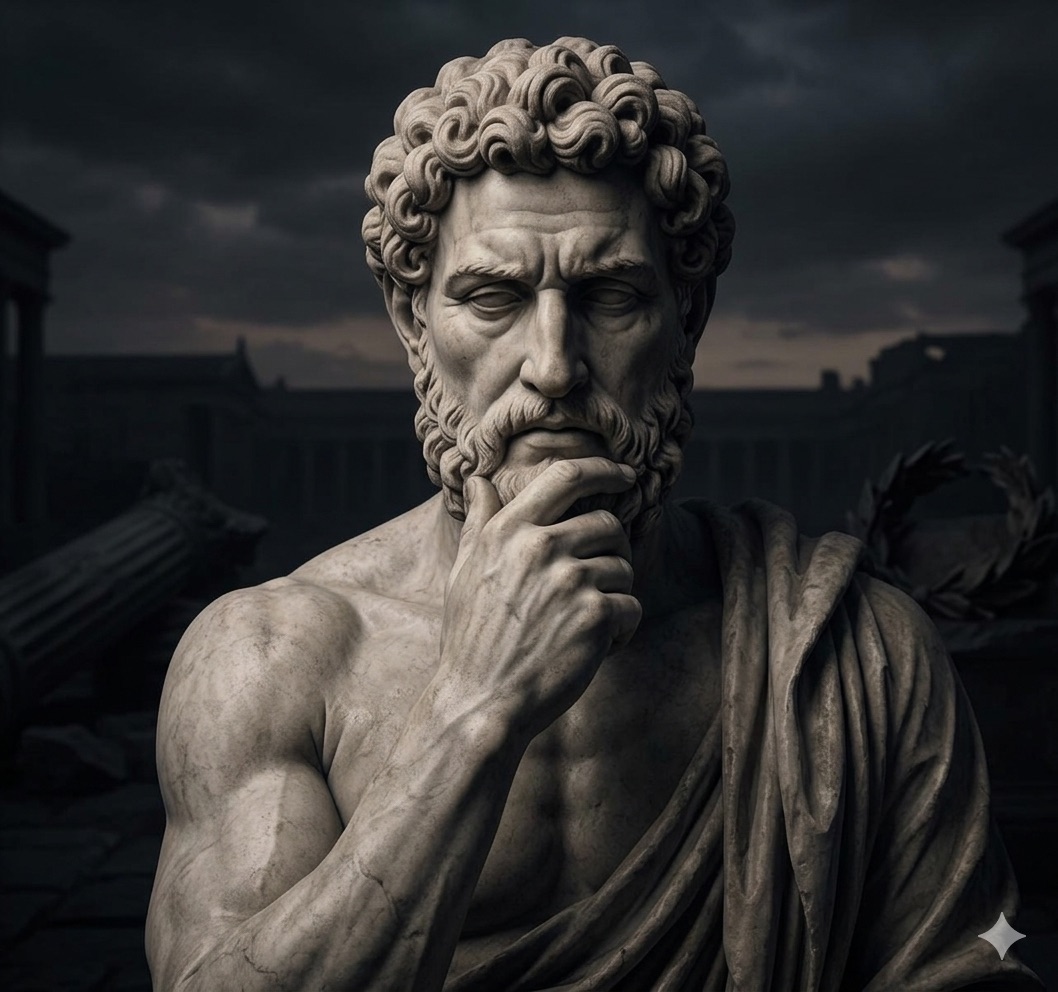

Life can feel like a wild roller coaster sometimes. Ups, downs, twists, and turns. It’s easy to get tossed around. We all want to feel a bit more steady. A bit more in control of our own feelings. Even when things outside us are crazy.
Epictetus was a man who lived a long, long time ago. He was a teacher. He had some really smart ideas about how to live a good life. His ideas are called Stoicism. They are like secret tools for your mind. Tools that can help you day by day.
This isn’t about being cold or unemotional. It’s about finding peace. It’s about being strong inside. It’s about living with wisdom. Let’s look at what Epictetus taught us.
Have you ever been stuck in traffic? Or had plans get canceled at the last minute? These things happen. They are outside of your power. Epictetus had a simple but powerful idea. There are things we can control. And there are things we cannot control.
The Difference is Key
This is the biggest secret of Stoicism. Knowing the difference. What can you control? Your thoughts. Your choices. Your actions. Your reactions. You decide what to think about something. You choose how to act.
What can you not control? The weather. What other people say or do. Bad luck. The past. The future. These things are like the wind. You can’t stop the wind. But you can choose to put on a jacket.
Imagine you’re playing a game. You can practice hard. You can try your best. That’s in your control. But you can’t control if the other team is just better that day. Or if you get a bad call from the referee. Focusing on what you can do is smart.
Your Inner World
Your mind is your kingdom. You are the king or queen. You get to decide what to let in. What thoughts to keep. What thoughts to send away. This takes practice. But it’s the most valuable skill you can learn.
Think about a time you were worried about something. Maybe a test at school. Or a presentation at work. You worried and worried. But when the time came, maybe it wasn’t so bad. Or maybe you handled it well. Your worries were only in your head.
In exploring the timeless wisdom of Stoic philosophers, one can find valuable insights not only from Epictetus but also from Marcus Aurelius. For those interested in understanding how ancient teachings can help us navigate modern challenges, the article on what Marcus Aurelius teaches about anxiety offers profound lessons that resonate today. You can read more about it here: What Marcus Aurelius Teaches About Anxiety.
Dealing with Tough Times
Life isn’t always sunny. Sometimes it storms. We lose things. We get hurt. We face unfairness. Epictetus had ideas for these moments too. He didn’t say life would be easy. He said you can be strong through it.
Don’t Fight Reality
When something bad happens, our first thought is often: “This shouldn’t be happening!” We fight against what is. Epictetus teaches us to accept what we can’t change. This doesn’t mean you like it. It means you stop wasting energy fighting it.
Think about a spilled glass of milk. Crying and yelling won’t pick it up. It’s spilled. It’s done. The best thing is to get a cloth and clean it. Accepting the spilled milk helps you move on to cleaning it.
What Doesn’t Break You
Sometimes difficult things happen. A job loss. A friendship ending. A health problem. These are hard. Epictetus believed these challenges can actually make us stronger. Like a muscle that gets stronger when you lift weights.
Each challenge is a chance to practice being strong. To practice being calm. To practice being wise. You learn more about yourself. You learn what you are truly capable of. These are not setbacks. They are lessons.
The Power of Your Judgement
Epictetus said it’s not things that upset us. It’s our judgement about those things. This is a big idea. Let’s break it down.
What is a Judgement?
A judgement is what you think about something. It’s your opinion. It’s your interpretation. You see a dog. You might judge it as friendly. Someone else might judge it as scary. The dog is just a dog. The judgement comes from your mind.
Imagine your phone gets a scratch. That’s a thing. You might judge the scratch as a disaster. Your phone is ruined. Or you might judge it as a small mark. It still works. The scratch is the same. Your opinion is different.
Why it Matters
Our judgements create our feelings. If you judge something as terrible, you feel terrible. If you judge it as minor, you feel less upset. You have the power to change your judgements. This is how you change your feelings without changing the outside world.
Someone cuts you off in traffic. The “thing” is they drove badly. Your judgement could be: “They are a terrible person! They have no respect for anyone!” This makes you angry.
Or your judgement could be: “Maybe they are having a bad day. Maybe they didn’t see me. It’s annoying, but it’s not about me.” This makes you feel less angry.
Living in the Present Moment
We spend a lot of time thinking about the past. Or worrying about the future. Epictetus reminded us that the present moment is all we truly have.
The Past is Gone
The past is like a book you’ve already read. You can learn from it. But you can’t go back and change the pages. Dwelling on past mistakes or regrets is like staring at an old page and wishing it was different. It’s time to turn the page.
Think about a funny memory. You can remember it. It makes you smile now. But you can’t relive the exact moment. The joy comes from remembering. But the moment itself is gone.
The Future is Not Here Yet
The future is just an idea. We imagine it. We plan for it. We worry about it. But it hasn’t happened. Spending all your time planning for a future that might not come is like building a house on sand.
When you’re always thinking about “what ifs,” you miss what’s happening now. That moment is your chance to experience life. To be happy. To learn. To love.
Now is Your Only Chance
Right now is the only moment where you can act. Where you can choose. Where you can breathe. If you’re always looking ahead, you’ll miss the parade happening right in front of you. Be here. Pay attention to what is happening.
You are eating a meal. If you are thinking about work the whole time, you won’t taste the food. You won’t enjoy the company. Be present for your own life.
In exploring the timeless wisdom of Epictetus, one can find valuable insights that resonate with modern challenges, particularly in dealing with difficult individuals. For a deeper understanding of how Stoic principles can aid in navigating these interpersonal conflicts, you might find it enlightening to read this article on navigating difficult people. The lessons derived from Stoicism not only enhance personal resilience but also foster healthier relationships in today’s complex social landscape.
Practicing Virtue
| Life Lessons From Epictetus | Relevance Today |
|---|---|
| Focus on what you can control | Helps in managing stress and anxiety |
| Practice self-discipline | Leads to personal growth and success |
| Accept the things you cannot change | Promotes inner peace and resilience |
| Value inner qualities over external circumstances | Encourages self-worth and contentment |
| Embrace adversity as a learning opportunity | Fosters resilience and personal development |
Epictetus believed the most important thing was to be a good person. To live with virtue. Virtue means things like wisdom, justice, courage, and temperance. These are the true good things. Not money or fame.
What is Truly Good?
Epictetus argued that external things are not good or bad in themselves. Your job is not good. Your wealth is not good. Your health is not good. These things can be lost. They are not reliable.
The only true good is within you. It’s your character. Your ability to be wise. To be fair. To be brave. To be disciplined. These things cannot be taken away from you.
Developing Your Character
This is about building your inner strength. It’s like exercising your body. You exercise your character by making good choices. By acting with integrity. By being honest. Even when it’s hard.
Imagine you have a choice. You can take a shortcut that involves lying. Or you can do the right thing, which takes more effort. Choosing the right thing, every time, builds your character. It makes you stronger inside.
In exploring the enduring wisdom of Epictetus, one can find valuable insights that resonate with modern life challenges. For instance, the Stoic practice of negative visualization, which encourages individuals to contemplate potential losses and hardships, can help cultivate resilience and appreciation for what one has. This concept is beautifully elaborated in a related article that delves into its practical applications in daily life. To learn more about this transformative practice, you can read the article here.
Putting It All Together
So, what does all this mean for you, right now? It means you have power. More power than you might think.
You Are the Pilot, Not the Passenger
Epictetus wants you to be the pilot of your life. Not just a passenger on a plane, going wherever the pilot decides. You can steer. You can choose your direction.
Focus on what you can control. Your thoughts. Your actions. Your reactions. This is your domain. Guard it well.
Let go of what you cannot control. The traffic. The weather. What others think. These are not your business. Worrying about them is a waste of energy.
Your Inner Peace is Yours
Your happiness doesn’t have to depend on outside things. It can come from within. From your own wisdom. Your own strength. Your own good character.
When you practice these ideas, life won’t magically become perfect. But you will become more perfect at handling it. You’ll feel steadier. Calmer. More in control of yourself.
Epictetus’s teachings are like timeless advice. They’ve helped people for thousands of years. They can help you too. Start small. Pick one idea. Practice it today. You might be surprised at the difference it makes. It’s a journey. Be patient with yourself. And enjoy the process of becoming a more resilient and peaceful person.