
Life can feel like a rollercoaster sometimes. Ups and downs. Good days and bad days. It’s easy to get caught up in all the stuff that happens around us. Things we can’t control. Like traffic jams. Or what other people think. This can make us feel frustrated. Or sad. Or even angry. But what if there was a way to feel more peaceful? A way to handle things better, every single day?
That’s where Stoicism comes in.
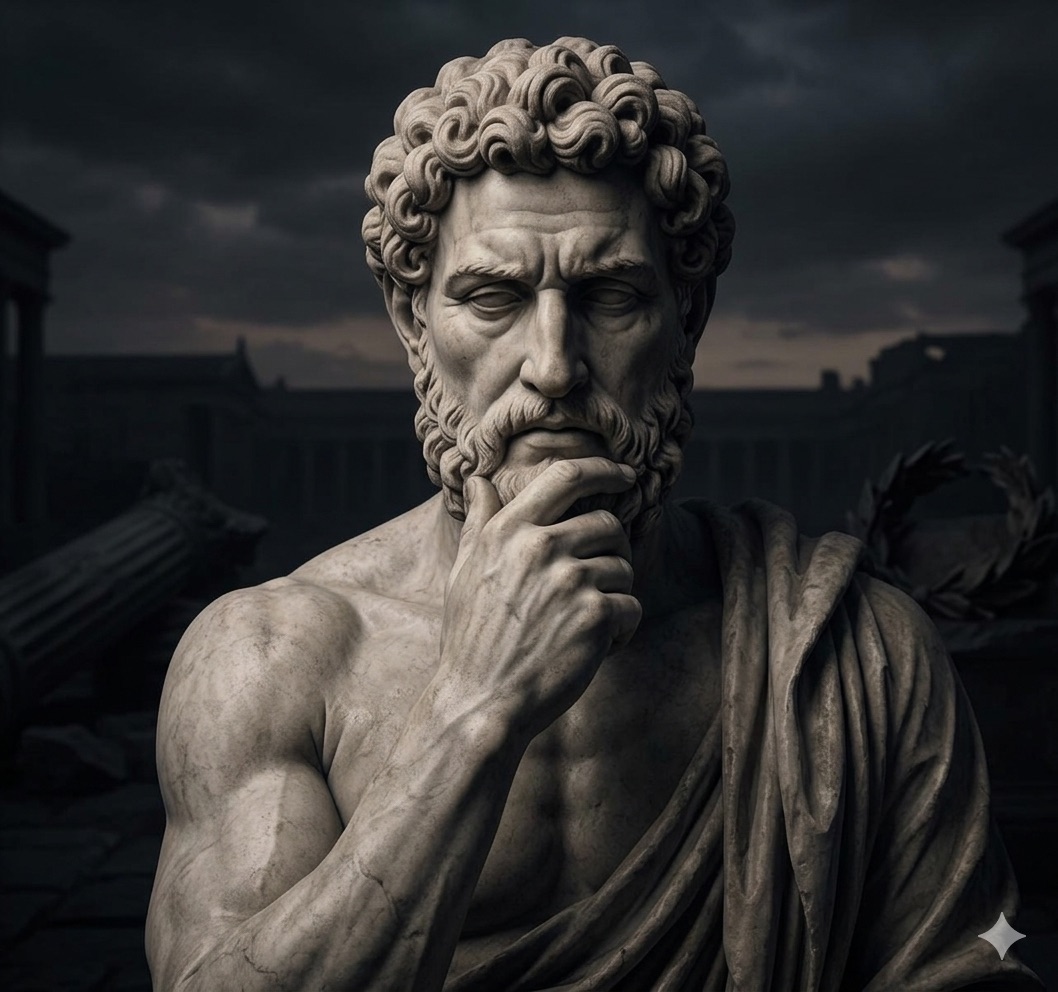
Stoicism is an old way of thinking. It’s been around for a very long time. But it’s still super useful today. It’s not about being emotionless. Or just putting up with things. It’s about learning to live a good life. No matter what happens. It’s like having a secret superpower for your mind. A power that helps you be stronger. And happier. Even when things get tough.
Let’s explore this power together. We’ll break it down into simple ideas. Things you can actually use. Today. And tomorrow. And the day after that.
This is the golden rule of Stoicism. It’s the first thing you need to learn. Think about your day. What things can you change? What things can you not change? It’s a really important question.
Your Thoughts and Actions
You can control what you think. You can control what you do. These are yours. All yours. Nobody else can force you to think a certain way. Or force you to act a certain way unless you let them. This is where your power truly lies.
Imagine you’re stuck in a long line. You can’t control how long the line is. That’s outside your control. But you can control how you react to it. You can choose to get annoyed. Or you can choose to be patient. You can take deep breaths. You can listen to a podcast. You can even strike up a friendly chat. Your reaction is up to you.
External Things
Now think about things outside of you. The weather. The economy. Other people’s opinions. The actions of your boss. These are things you cannot control. Trying to control them is like trying to catch smoke. It’s a waste of energy.
When you’re driving, and someone cuts you off, it’s annoying. But you can’t control what that other driver does. You can’t control that they might be having a bad day. You can control your own driving. And your own reaction. Getting angry won’t change their behavior. It just makes you feel worse.
The Serenity Prayer Connection
You might have heard something like the Serenity Prayer. It asks for the serenity to accept the things we cannot change. Courage to change the things we can. And wisdom to know the difference. This is basically Stoicism in a nutshell. Learning this difference is key.
If you’re interested in how Stoicism can help you manage daily challenges, you might find the article on navigating modern anxiety particularly insightful. It draws on the wisdom of Marcus Aurelius to provide practical strategies for dealing with stress and uncertainty in today’s fast-paced world. To explore these valuable insights, check out the article here: Navigating Modern Anxiety: Insights from Marcus Aurelius.
Practicing Acceptance
Once you know what you can’t control, the next step is to accept it. This doesn’t mean you like it. Or that you approve of it. It just means you stop fighting reality. You stop wasting energy wishing things were different.
Accepting Setbacks
Life will always throw curveballs. You might miss a deadline. Or have an argument with a friend. Or your favorite team might lose. These things happen. Fighting against them only creates more suffering. Stoicism teaches us to say, “Okay, this happened.”
Instead of dwelling on “why me?” or “this shouldn’t have happened,” try to accept the situation. Then you can ask, “What can I do now?” This shifts your focus from the problem to the solution. It’s a much more powerful place to be.
Not Getting Upset About “What Ifs”
We often torture ourselves with “what if” scenarios. “What if I had said this?” “What if I hadn’t done that?” These are regrets. And they are about things that are long gone. They are in the past. You can’t change the past.
Stoicism encourages us to focus on the present. And to make the best choices we can now. Dwelling on past mistakes is like driving while looking only in the rearview mirror. You’re bound to crash.
Embracing Imperfection
Nobody is perfect. And life isn’t perfect either. Trying to force perfection on ourselves or others is a recipe for disappointment. Acceptance means embracing the messiness. It means seeing the beauty in things not being quite right.
Think about a favorite old t-shirt. It might have a small hole or a faded patch. But it’s still your favorite, right? Because you accept its imperfections. You love it for what it is. This is the kind of acceptance Stoicism practices.
Focusing on Virtue

For Stoics, the most important thing in life is virtue. Virtue means living a good life. It means being wise. Being fair. Being courageous. And being temperate. These are the only true goods. Everything else is just a preference.
What is Virtue?
Virtue is like having a good character. It’s about doing the right thing. Even when it’s hard. It’s about making good choices. Based on what is good for yourself and others. It’s about being a good person.
Being wise means understanding the world around you. And making good judgments. Being fair means treating everyone with respect. And doing what is right. Being courageous means facing your fears. And standing up for what you believe in. Being temperate means having self-control. And not giving in to your desires too easily.
Why Virtue Matters Most
Stoics believed that external things like money, fame, or good health were not guaranteed. They could be taken away. But your character. Your virtue. That is something you can always keep. It’s the only thing that truly belongs to you.
Imagine two people. One is very rich. But they are also greedy and unkind. The other person might not have much money. But they are generous and honest. The Stoic would say the second person is richer. Because they have virtue.
Living by Your Values
Focusing on virtue means living by your internal compass. It’s about acting in line with what you believe is right. Not just what feels good in the moment. Or what others expect from you. This leads to a deep sense of purpose.
Preparing for Difficulties

The world isn’t always sunny and bright. Sometimes it rains. Sometimes it storms. Stoicism isn’t about pretending bad things won’t happen. It’s about being ready for them.
Negative Visualization
This sounds a bit scary. But it’s a powerful Stoic practice. It’s called premeditatio malorum. It means thinking about what could go wrong. Not to be gloomy. But to be prepared.
Imagine you have a very important meeting. Before you go, you might think, “What if I forget my notes?” Or “What if I stumble over my words?” Or “What if they don’t like my ideas?” This isn’t about being negative. It’s about mentally rehearsing. It’s about already having thought about these possibilities. So if they do happen, you won’t be completely shocked. You’ll be more likely to handle them calmly.
Building Mental Resilience
When you practice negative visualization, you’re building mental toughness. You’re developing a kind of inner armor. This armor protects you from being overwhelmed. When bad things happen, you’re not as fragile. You can bounce back quicker.
Think of an athlete training for a big competition. They train hard. They push their limits. They prepare for the unexpected. This makes them stronger. Stoicism does the same for your mind.
Appreciating What You Have
By thinking about what we could lose, we also learn to appreciate what we have. This is a beautiful paradox. When you consider the possibility of something bad happening. You become more grateful for it when it’s still good.
You might think, “I really enjoy my morning coffee.” If you imagine a day where you couldn’t have it. You might appreciate that warm cup even more the next day. It’s a way of practicing gratitude through foresight.
In exploring the transformative power of Stoicism, one can gain valuable insights from the teachings of Epictetus, who emphasized the importance of mental resilience. For those interested in deepening their understanding of how Stoicism can enhance daily life, a related article discusses how Epictetus builds mental strength and offers practical strategies for applying these principles. You can read more about it here. By integrating these teachings into your routine, you may find that your perspective on challenges shifts, leading to a more fulfilling existence.
Living in Accordance with Nature
| Date | Stoic Practice | Outcome |
|---|---|---|
| Day 1 | Morning meditation on gratitude | Increased sense of appreciation |
| Day 2 | Journaling on things within control | Reduced anxiety |
| Day 3 | Practicing negative visualization | Heightened resilience |
| Day 4 | Stoic reading before bed | Improved perspective |
| Day 5 | Engaging in acts of kindness | Enhanced sense of community |
Stoics believed in living in harmony with nature. This has a few meanings. One is to live in line with our human nature. Which is to be rational and social. Another is to understand and accept the natural order of things.
Our Rational Nature
Humans are intelligent beings. We have the capacity for reason. Stoicism encourages us to use this reason. To guide our thoughts and actions. To make logical choices. Not to be driven by impulse or emotion alone.
When you’re feeling angry, your reason can step in. It can ask, “Is this anger helpful?” “Is there a better way to handle this?” Using reason is like having a wise friend inside your head. Guiding you.
Our Social Nature
We are also social creatures. We live in communities. Stoicism teaches us that we have a duty to others. To be kind. To be helpful. And to contribute to the common good.
Think about your family. Your friends. Your colleagues. We are all connected. Our actions affect others. Living according to nature means recognizing this connection. And acting in ways that benefit everyone.
Accepting the Flow of Life
The natural world has cycles. Birth and death. Growth and decay. Stoicism teaches us to accept these cycles. To understand that change is constant. And to find peace in this flow.
Imagine a river. It’s always moving. It can’t be stopped. Trying to stop it is futile. It’s better to learn to swim with the current. Or to build a bridge. Accepting the natural flow of life leads to a sense of calm.
If you’re interested in exploring how Stoicism can reshape your daily life, you might find it beneficial to read about the insights of contemporary thinkers who embody these principles. A great resource is an article that discusses modern-day Stoic philosophers and their contributions to the philosophy. You can check it out here. Their perspectives can provide you with practical applications of Stoic teachings that can enhance your journey toward personal transformation.
The Daily Practice of Stoicism
Stoicism is not a one-time fix. It’s a way of life. It requires consistent effort. Doing these little things every day can make a big difference.
Reflection and Journaling
Take a few minutes each day to reflect. What did you do well? What could you have done better? A journal can be a great tool for this. Write down your thoughts. Your challenges. Your successes.
You can ask yourself questions like: “Did I act with virtue today?” “Did I accept what I couldn’t control?” “What did I learn from today’s events?” This practice helps you see your progress. And identify areas for improvement.
Morning and Evening Routines
Start your day with a clear intention. Think about what virtues you want to embody. End your day with a review. Look back on how things went. Learn from your experiences.
A simple morning thought could be: “Today, I will be patient.” An evening reflection might be: “I could have been more patient with my colleague.” This gentle correction is the heart of Stoic self-improvement.
Applying Stoicism to Everyday Situations
Look for opportunities to practice Stoicism throughout your day. That traffic jam? An opportunity to practice acceptance. A difficult conversation? An opportunity to practice courage and fairness.
Every moment is a chance to exercise your Stoic muscles. The more you practice, the stronger they become. It’s like learning to ride a bike. At first, it’s wobbly. But with practice, you become more confident.
The Lasting Impact of Stoicism
When you start applying these Stoic ideas, you’ll notice a change. It might be subtle at first. Then it will grow.
Inner Peace
You’ll find a new sense of calm. Even when things are chaotic around you. This is because you’re not as easily disturbed. You’re focusing on what you can control. And accepting what you can’t.
This inner peace is not about shutting off your feelings. It’s about having a stable mind. A mind that isn’t tossed around by every little thing. Like a ship with a strong anchor.
Greater Resilience
You’ll become more resilient. Life’s challenges won’t knock you down as hard. You’ll be able to get back up faster. And learn from the experience.
Think of a tree. A strong tree can bend in the wind without breaking. It can withstand storms. Stoicism helps you grow that kind of strength.
A More Purposeful Life
When you focus on virtue and living in accordance with nature, your life gains meaning. You’re not just drifting along. You have a direction. A purpose.
You’ll feel more in control of your own happiness. Because your happiness comes from within. From your character. Not from what happens to you.
This journey of Stoicism is a lifelong one. It’s a path of continuous learning. And growing. By embracing these simple principles. You can begin to transform your life. Day by day. Creating a life of greater peace. And purpose.