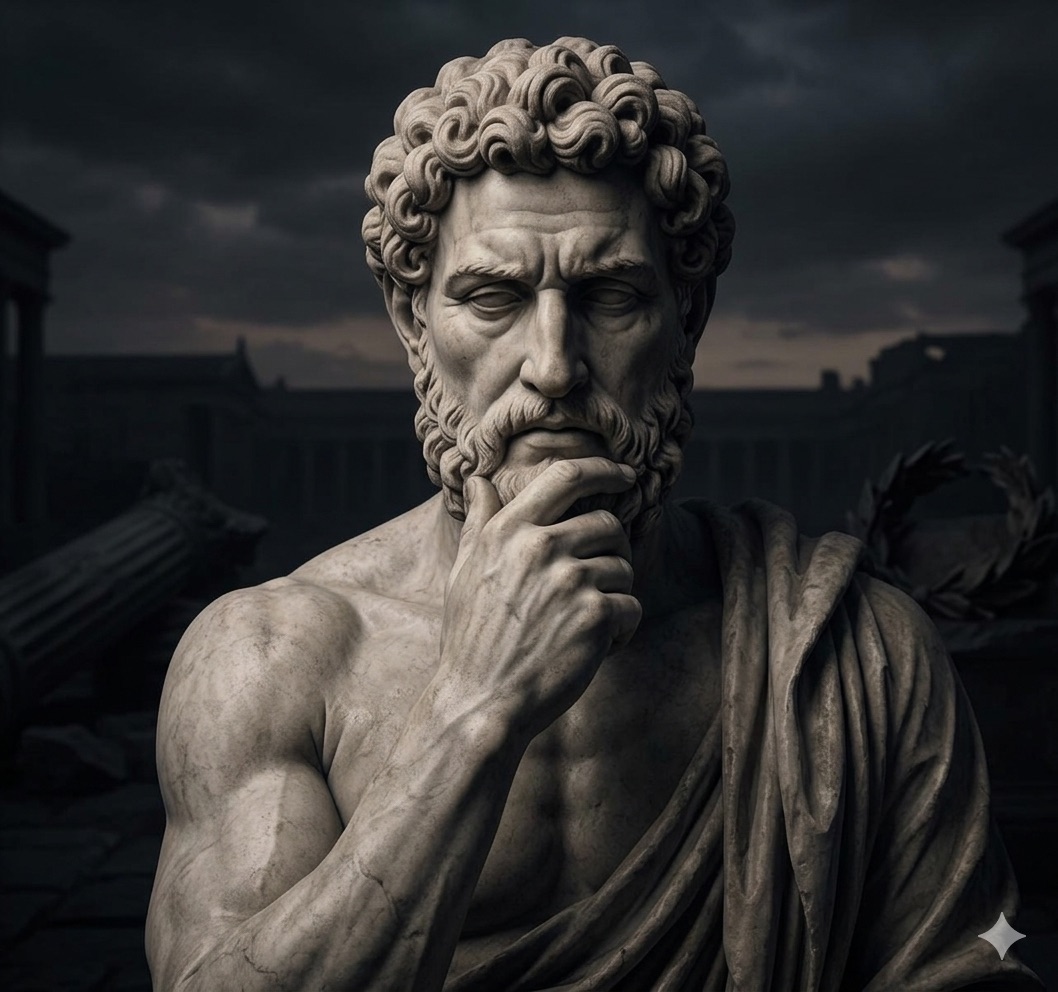

Life can feel like a rollercoaster sometimes. Ups and downs. Good days, tough days. We all want to feel a bit more steady, right? Like we can handle whatever comes our way without losing our cool.
If you are new to the philosophy, begin with our beginner’s guide to what Stoicism is, then return here to turn those principles into a daily practice.
That’s where Stoicism comes in. It’s an ancient way of thinking that teaches us how to live a good life. A calm, peaceful life. It’s not about being emotionless. It’s about understanding what we can control and what we can’t. And focusing our energy there.
Today, we’re going to talk about how to actually do Stoicism every single day. Not just read about it. But live it. It’s about small, simple steps. Steps anyone can take.
This is the big one. The most important idea in Stoicism. Think about it like this. You go to a picnic. You can decide to bring a blanket. You can decide what sandwich to pack. You can decide to enjoy the sunshine.
But you can’t control the weather. It might rain. You can’t control if a bee buzzes too close. You can’t control if another guest is a bit grumpy.
Stoics say we should only worry about the things we have power over. Our thoughts. Our actions. Our decisions. Everything else? It’s outside of our control.
Your Inner World is Yours
Your thoughts are like your own private garden. You get to decide what grows there. Do you want to water roses of kindness? Or weeds of worry?
It’s your choice. No one else can plant those weeds for you. Your feelings are also part of this inner world. While feelings can come up on their own, you have a lot of power over how you react to them.
The Weather Outside vs. The Weather Inside
Imagine it’s a stormy day. You can’t stop the rain. You can’t stop the thunder. That’s the weather outside. But you can choose to put on a cozy sweater. You can choose to read a good book. You can choose to find comfort inside.
That’s the weather inside. Stoicism helps you build that inner shelter. It helps you feel okay even when things outside are not perfect. It’s like having a warm house on a cold day.
If you’re interested in incorporating Stoicism into your daily routine, you might find the article on simplifying your life through Stoicism particularly insightful. It offers practical tips on how to declutter your mind and surroundings, allowing you to focus on what truly matters. To read more about this approach, check out the article here: How to Simplify Your Life Using Stoicism.
Practicing Acceptance
Acceptance might sound like giving up. But it’s not. It’s like saying, “Okay, this is what’s happening right now.”
Think about traffic. You’re late for a meeting. You’re stuck. You can get really angry. You can honk your horn. That won’t make the traffic move. It will just make you feel worse.
Or, you can accept it. “Okay, I’m stuck.” Then you can use that time. Maybe listen to a podcast. Or just breathe and relax.
Accepting What Is
When we fight against reality, we just cause ourselves pain. It’s like trying to push a boulder uphill. It’s tiring and doesn’t get you anywhere.
Stoics suggest we first understand what is true. Then, we work with it. Not against it. This doesn’t mean we never try to change things. It means we accept the starting point.
The Serenity Prayer Idea
There’s a famous saying that’s very much like Stoicism. “Grant me the serenity to accept the things I cannot change, the courage to change the things I can, and the wisdom to know the difference.”
This is the heart of accepting what we can’t control. It’s about finding peace with the unchangeable. And then, focusing our energy on what we can change.
Focusing on Virtue

What makes a good life? For Stoics, it’s not about having lots of money or fame. It’s about being a good person. Having good character.
They talked about certain virtues. Like wisdom. Justice. Courage. Temperance. These are like inner treasures. Nobody can take them away from you.
Being a Good Person is the Goal
Imagine you’re playing a game. You want to play it well. You want to be fair to others. You want to be brave when things are scary. You want to be calm and not overdo things.
These are the “actions” Stoics focus on. Doing the right thing. Even when no one is watching. Even when it’s hard.
Wisdom in Action
Wisdom isn’t just knowing facts. It’s about understanding what’s truly important. It’s about making good choices. Like knowing that getting angry in traffic won’t help. That’s wisdom.
It’s also about understanding yourself. Why you react certain ways. And choosing a better reaction. It’s a lifelong learning process.
Courage on Your Walk
Courage doesn’t always mean fighting dragons. It can be speaking up when something is wrong. It can be trying something new that scares you. It can be facing a difficult conversation.
Stoic courage is about acting despite fear. Not the absence of fear. It’s doing what’s right, even when your knees are knocking. Just like taking that first step outside when you’re a bit unsure.
Temperance for Balance
Temperance is about balance. Not too much, not too little. It’s about enjoying things without becoming a slave to them. Like enjoying a piece of cake, but not eating the whole box.
It’s also about managing your emotions. Not letting them sweep you away. It’s about self-control. A calm ship on a wavy sea.
Daily Reflection

The Stoics believed in looking back at their day. This is a simple, powerful practice. Before you go to sleep, take a few minutes to think.
What went well? What could have gone better? Did you act according to your values?
Angel and Devil on Your Shoulder
Think of it like a little check-in with yourself. Did you feed the “good angel” side of you today? Or did the “grumpy devil” win a few rounds?
It’s not about beating yourself up. It’s about learning. Like a student looking at their homework. “Ah, I see where I made a mistake there.”
Journaling Your Thoughts
You can write these reflections down. Or you can just think them through. Jotting down a few notes can be really helpful. It makes your thoughts more clear.
You can ask yourself: What small act of kindness did I do? What moment did I handle with patience? Where did I get caught up in things I can’t control?
Learning from Mistakes
Every day is a chance to practice. If you had a tough day, that’s okay. It’s a chance to learn for tomorrow. You might have snapped at someone. Or worried too much.
The reflection is your chance to say, “Tomorrow, I’ll try to be more patient.” Or, “Tomorrow, I’ll remember what I can and cannot control.” It’s like hitting the practice button.
If you’re interested in incorporating Stoic principles into your daily routine, you might find it beneficial to explore how self-control plays a crucial role in this practice. A related article that delves deeper into this topic is available at How to Build Self-Control with Stoicism, which provides valuable insights on developing discipline and resilience through Stoic teachings. By understanding the connection between self-control and Stoicism, you can enhance your ability to navigate life’s challenges with a calm and focused mindset.
Mindfulness in the Moment
| Principle | Explanation |
|---|---|
| Acceptance | Recognize what is within your control and what is not, and focus on accepting the things you cannot change. |
| Self-reflection | Regularly reflect on your thoughts and actions to improve self-awareness and make better decisions. |
| Gratitude | Practice gratitude for the things you have, rather than focusing on what you lack. |
| Resilience | Develop the ability to bounce back from adversity and maintain a sense of inner peace. |
| Compassion | Show empathy and understanding towards others, even in challenging situations. |
Mindfulness is being aware of what’s happening right now. No judgment. Just noticing. Stoicism and mindfulness go hand-in-hand beautifully.
When you’re washing dishes, just wash dishes. Feel the warm water. Hear the suds. See the clean plate. Don’t think about that email you need to send.
The Power of “Now”
So much of our worry comes from thinking about the future. Or regretting the past. But life only happens in the present moment. The “now.”
By practicing mindfulness, you bring yourself back to “now.” This can be incredibly calming. It stops the endless loop of “what ifs.”
Small Moments, Big Impact
You don’t need to meditate for hours to be mindful. A few minutes here and there makes a difference.
- When you eat, really taste your food.
- When you walk, feel your feet on the ground.
- When you listen to someone, really hear them.
These small, aware moments add up. They build a foundation of peace.
If you’re looking to deepen your understanding of Stoicism and its practical applications, you might find it helpful to explore how Stoic principles can aid in managing stress and burnout in today’s fast-paced world. A related article discusses this topic in detail, providing insights on how to harness Stoic wisdom to navigate modern challenges. You can read more about it in this informative piece on surviving modern burnout.
Practicing Gratitude
This is another simple Stoic idea that has a huge impact. What are you thankful for?
It’s easy to focus on what we lack. The new phone we want. The vacation we can’t afford. The promotion we didn’t get.
Appreciating What You Have
Stoics encourage us to look at what we do have. A roof over our heads. Food on our table. People who care about us. These are not small things.
When you’re stuck in traffic, be grateful you have a car. When it’s raining, be grateful you have a warm place to go.
Shifting Your Focus
Gratitude shifts your focus from what’s missing to what’s present. It’s like turning up the light in a dark room. Suddenly, you see all the good things.
It doesn’t mean you stop striving for more. It means you appreciate your current blessings while you work towards future goals. It creates a more joyful present.
Conclusion: Small Steps to a Stronger You
Mastering Stoicism isn’t about becoming a different person overnight. It’s about small, consistent practices. Like tending a garden. You water it a little each day. And it grows stronger.
Remember the core ideas:
- Focus on what you can control: your thoughts and actions.
- Practice accepting what you cannot control.
- Cultivate a good character.
- Reflect on your day.
- Be mindful in the moment.
- Practice gratitude.
These aren’t complicated rules. They are simple ways of living. Ways to build resilience. Ways to find peace.
Start with one small practice. Maybe today, just focus on accepting one thing you can’t change without getting upset. Or try to be more mindful while you drink your morning coffee.
The journey of Stoicism is a lifelong one. But the rewards are immense. A calmer mind. A more peaceful heart. A stronger, more resilient you. Just keep taking those small, steady steps. You’ve got this.