


You are likely familiar with the pervasive hum of negative thoughts. They can be a persistent companion, whispering doubts, magnifying worries, and painting the world in shades of gray. You might feel like a ship adrift, tossed by the turbulent waves of anxiety and self-criticism, unable to find solid ground. This article will explore how the ancient philosophy of Stoicism offers a robust framework for navigating these internal storms and achieving a state of greater mental clarity and resilience.
Before you can truly break free from negative thinking, you must first understand what it is that you’re dealing with. Stoicism posits that your suffering often stems not from external events themselves, but from your judgments and interpretations of those events. You are not inherently unlucky; rather, you interpret a situation as unlucky. This distinction is crucial.
The Dichotomy of Control: Your Inner Fortress
At the heart of Stoic philosophy lies the dichotomy of control. This fundamental principle, articulated by figures like Epictetus, asserts that some things are within your power, and some are not. Your thoughts, your judgments, your desires, and your actions all fall into the category of things you can control. The weather, other people’s opinions, your past, and the outcomes of certain ventures, however, do not.
- Internal vs. External: Recognize that your mind is your primary battlefield. While you cannot control whether it rains tomorrow, you can control how you react to the rain. Do you allow it to dampen your spirits and ruin your plans, or do you adjust your expectations and find indoor activities? This internal command center is your unassailable fortress, provided you learn to defend it.
- The Illusion of External Causation: You may believe that a promotion would make you happy, or that a breakup caused your sadness. Stoicism suggests this is a misattribution. The promotion or breakup are external events. Your happiness or sadness arises from your evaluation of these events and your subsequent desires and aversions. You are not a puppet whose strings are pulled by the outside world; you are the puppeteer of your own inner experience.
The Role of Judgments and Perceptions
Your perceptions are the lenses through which you view the world, and negative thoughts are often the result of distorted or maladaptive lenses. Stoicism teaches that these judgments are not inherent truths but rather constructions of your mind.
- Distinguishing Events from Interpretations: When a negative thought arises, practice identifying the raw event versus your interpretation of it. Did you receive critical feedback on a project? The event is the feedback. Your interpretation might be: “This means I’m incompetent and will never succeed.” This latter part is the judgment, the fertile ground for negative thinking.
- The Power of Reframing: Stoicism encourages you to actively reframe your interpretations. Instead of “This means I’m incompetent,” consider: “This is an opportunity to learn and improve my skills. Everyone makes mistakes, and constructive criticism is a valuable tool for growth.” This reframing is like adjusting the focus on your mental lens, bringing clarity and objectivity.
In exploring the ways Stoicism can aid in overcoming negative thinking, it’s also beneficial to consider how it enhances focus in our increasingly distracted world. The article titled “Stoicism Training for Focus in a Distracted World” delves into techniques that can help individuals cultivate concentration and mindfulness, which are essential for maintaining a positive mindset. You can read more about these strategies by visiting the article here: Stoicism Training for Focus in a Distracted World.
Stoic Principles as Tools for Mental Liberation
Stoicism offers a set of practical principles that, when applied diligently, can dismantle the scaffolding of negative thought patterns. These are not passive affirmations but active practices that require consistent effort.
Mindfulness of Your Thoughts: The Watchful Guardian
Like a sentry on a castle wall, you must become acutely aware of the thoughts that pass through your mind. This mindful observation is the first step in intervening in the cycle of negativity.
- Observing Without Judgment: The practice is to simply observe your thoughts as they arise, without immediately accepting them as truth or condemning yourself for having them. Imagine them as clouds drifting across the sky; you see them, acknowledge their presence, but you don’t try to grasp them or change their course.
- Identifying Negative Patterns: Through this observation, you will begin to recognize recurring themes in your negative thinking. Are you prone to catastrophizing, where you imagine the worst possible outcome? Do you engage in all-or-nothing thinking, seeing situations in black and white? Do you personalize setbacks, believing they are direct attacks on your worth? Identifying these patterns is like finding the weak points in an enemy’s defense.
- The “What If” Trap: Many negative thoughts manifest as endless “what if” scenarios. Stoicism advises acknowledging these possibilities but not dwelling on them. You can prepare for potential challenges without succumbing to the anxiety of the hypothetical.
The Stoic View of Adversity: An Opportunity for Strength
Your habitual response to adversity is a significant driver of negative thinking. Stoicism encourages a radical shift in perspective, viewing challenges not as misfortunes to be endured, but as opportunities for personal development.
- Premeditatio Malorum (The Premeditation of Evils): This is not about morbid fascination with disaster, but a mental exercise of contemplating potential hardships. By mentally preparing for difficulties, you reduce their shock value and emotional impact when they occur. Imagine rehearsing for a play; you go through the difficult scenes beforehand so that on opening night, you are less likely to be thrown off.
- Turning Obstacles into Stepping Stones: Marcus Aurelius, in his Meditations, frequently wrote about nature’s inclination to transform obstacles into fuel for growth. When faced with a difficulty, ask yourself: “How can I use this to become stronger, wiser, or more virtuous?” A setback in your career, for instance, can be an invitation to reassess your skills, network more effectively, or discover a new passion.
- The Acceptance of What Is: This is not resignation but a clear-eyed acknowledgment of reality. Fighting against what you cannot change is a guaranteed path to frustration and negative rumination. Stoicism guides you to accept the present moment without complaint and to focus your energy on what you can influence.
Practical Stoic Exercises for Quieting the Inner Critic

Stoicism is not just theory; it is a practical philosophy designed to be lived. Here are exercises you can integrate into your daily life to actively combat negative thinking.
In exploring the ways Stoicism can assist in overcoming negative thinking, you might find it beneficial to read about emotional detachment and its significance in Stoic philosophy. This approach not only helps in managing your emotions but also fosters a clearer perspective on life’s challenges. For a deeper understanding of this concept, check out the article on mastering emotional detachment the Stoic way, which provides valuable insights into how these practices can lead to a more balanced and resilient mindset.
Virtue as the Sole Good: Realigning Your Values
A core tenet of Stoicism is that virtue is the only true good, and vice the only true evil. External things like wealth, reputation, or health are considered “indifferents.” This recalibration of your values can profoundly reduce negative thinking.
- Focus on Character, Not Circumstance: When your negative thoughts center on external losses or perceived failures, remind yourself that your true worth lies in your character – your courage, justice, wisdom, and temperance. Did you act with integrity? Did you treat others with kindness? These are the metrics that truly matter.
- Detaching from External Outcomes: If you are obsessing over a particular outcome, be it a job offer or the outcome of a relationship, practice observing your desire for that outcome dispassionately. Remind yourself that while you can strive for an outcome, its realization is not fully within your control. Your virtue lies in your effort and how you conduct yourself throughout the process.
- The Inner Compass: When faced with a decision, ask yourself: “What would the virtuous person do?” This inner compass, aligned with reason and morality, can guide you away from choices that might lead to future regret and negative self-judgment.
Negative Visualization as a Shield
This practice involves consciously envisioning less fortunate scenarios to cultivate gratitude and reduce the fear of loss.
- Appreciating What You Have: Imagine losing the things you readily take for granted – your health, your loved ones, your home, your ability to express yourself. By vividly contemplating their absence, you can foster a deeper appreciation for their presence in your life. This gratitude acts as a powerful antidote to discontent and negativity.
- Reducing the Fear of the Future: By confronting potential losses in a controlled mental environment, you can diminish the power they hold over you. When you’ve already mentally navigated the loss of a job, the actual occurrence is likely to be less devastating. You are building mental antibodies against future suffering.
- A Not-So-Morbid Exercise: It may sound dystopian, but this is not about dwelling on misfortune. It’s about inoculating yourself against it. Think of it as a mental vaccine, preparing you for potential challenges without infecting you with their fear.
Learn more about What stoicism is and how it can improve your life.
Embracing the Stoic Path to a Clearer Mind
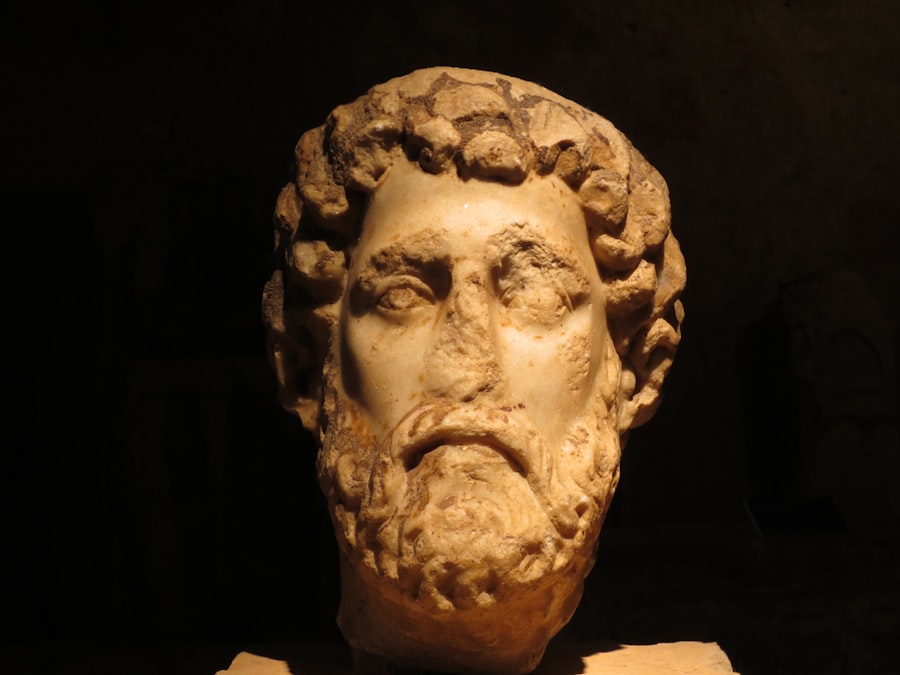
Breaking free from negative thinking is not an overnight transformation. It is a process of continuous learning and application. Stoicism provides you with the philosophical bedrock and the practical tools to cultivate a mental landscape where negative thoughts are less likely to take root and flourish.
The Practice of Self-Reflection and Journaling
Consistent self-examination is a cornerstone of Stoic practice. Journaling provides a tangible way to engage with your thoughts and apply Stoic principles.
- Daily Review: At the end of each day, dedicate time to reflect on your actions, thoughts, and emotions. Ask yourself: “Where did I act virtuously? Where did I falter? Did I allow external events to disturb my inner peace? What could I have done differently?” This honest assessment is like tending your garden, weeding out unproductive thoughts.
- Challenging Your Own Beliefs: When you encounter a strong negative belief, write it down and then systematically question its validity. Are you experiencing cognitive biases? Is there evidence that contradicts this belief? Stoic journaling empowers you to become your own objective therapist.
- Tracking Progress: Over time, your journal will become a record of your growth. You will see patterns emerge, areas where you have made significant progress, and areas that require continued attention. This tracking reinforces your efforts and provides motivation.
The Power of Reason and Logic
Stoicism emphasizes the use of reason to understand the world and your place in it. Negative thoughts often defy logic.
- Logical Fallacies in Your Thinking: Learn to identify common logical fallacies in your own thought processes. Are you jumping to conclusions? Are you engaging in overgeneralization? Recognizing these flaws in your reasoning allows you to dismantle them.
- Applying Stoic Logic: When a negative thought arises, pause and assess it through the lens of Stoic logic. Is this thought based on an accurate perception of reality? Is it within my control? By applying reason, you can often see the irrationality of your negative thinking for what it is – a misleading narrative.
- The Calmness of Reason: Just as a steady hand can guide a ship through a storm, reason can navigate you through the turbulence of negative emotions. Cultivating a habit of rational assessment allows you to approach challenging situations with a clear head, rather than being overwhelmed by emotional reactions.
Living in Accordance with Nature
Stoicism encourages living in accordance with the natural order of the universe and your own nature as a rational being. This has profound implications for your mental well-being.
- Accepting the Impermanence of All Things: Understand that change is the only constant. Nothing lasts forever, and this applies to both pleasant and unpleasant experiences. Embracing this impermanence reduces attachment and the pain of loss, thus diminishing a fertile ground for negative thoughts.
- Your Natural Inclination Towards Virtue: Recognize that you have an innate capacity for reason and virtue. When you act against this nature, you experience inner conflict, which often manifests as negative self-judgment. Aligning your actions with your innate rational and social nature fosters a sense of peace and well-being.
- Finding Serenity in the Present: By focusing on living virtuously in the present moment, you shift your attention away from anxieties about the future or regrets about the past. This present-moment awareness, grounded in reason and virtue, is a powerful shield against the onslaught of negative thinking.
You are not defined by your negative thoughts. They are simply mental habits that can be unlearned and replaced with more constructive ones. By embracing the principles and practices of Stoicism, you can forge a path towards a resilient, clear, and liberated mind, one where you are the master of your inner world, not a captive of its shadows.
