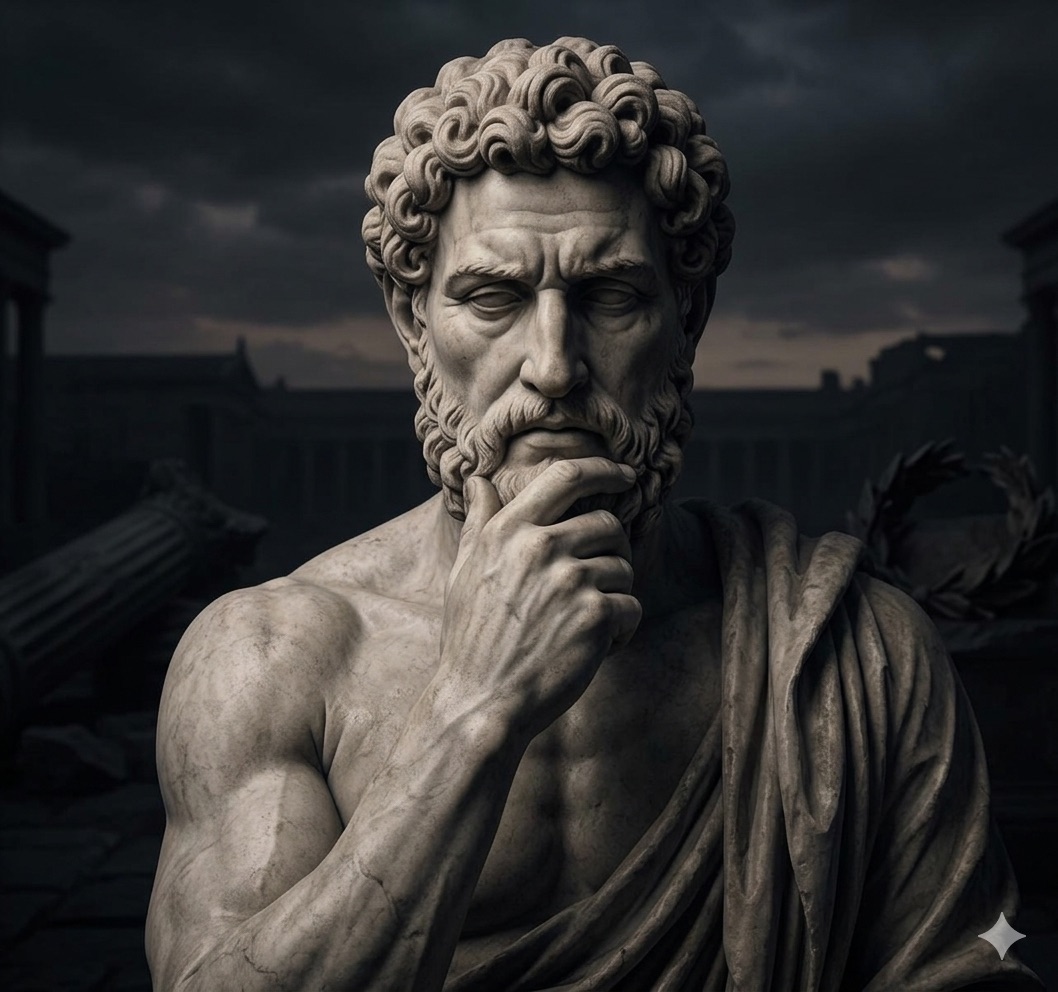

Anxiety can make your thoughts race and your body tense, especially when your attention is fixed on outcomes you cannot control. Stoic philosophy offers a practical way to interrupt that cycle: separate what depends on you from what does not, then put your energy into your judgments, choices, and next action.
If you are new to the philosophy, our beginner’s guide to Stoicism explains the ideas behind control, judgment, and emotional resilience.
This guide explains how ideas from Epictetus, Seneca, and Marcus Aurelius can help you respond to anxious thoughts with greater clarity. Stoicism is not a substitute for professional mental-health care, but its exercises can be a useful addition to appropriate support and treatment.
Feeling a bit fluttery inside? Like a little bird is trapped in your chest? That’s often what anxiety feels like. It’s a common feeling. Many people experience it. It can make your thoughts race. It can make your body feel tight. It can feel like a storm is brewing.
But what if there was a way to find a little calm, even when the storm is raging? Ancient thinkers, called Stoics, had some really helpful ideas about this. They lived a long time ago. But their wisdom still works today. It’s like having a secret map to peace. This map can help you quiet your anxious thoughts. It can help you feel steadier.
Stoicism isn’t about not feeling things. It’s about understanding what you can control. And what you can’t. It’s about learning to be okay, no matter what happens. Let’s explore some of their secrets for calming your mind.
This is the biggest Stoic idea. It’s like a superpower. It helps us understand where our worry comes from. Most of our anxiety comes from things outside our power.
The Circle of Control
Imagine a big circle. Inside this circle are things you can change. This is your action. This is your effort. This is your choice.
Outside the circle are things you cannot change. What other people do is outside your circle. The weather is outside your circle. What happened yesterday is outside your circle.
Focusing Your Energy
When you worry about things outside your circle, you waste energy. It’s like trying to push a mountain. It’s tiring. And it doesn’t work.
But when you focus on what’s inside your circle, you have power. You can choose your response. You can choose your actions. This is where true calm begins.
Example: Stuck in Traffic
You’re late for an appointment. You’re stuck in traffic. The traffic is outside your circle of control. You can’t make cars disappear.
Your reaction is inside your circle. You can choose to fume. Or you can choose to listen to a podcast. You can choose to accept the situation. You can choose to call ahead and let them know you’ll be late.
The Danger of “What Ifs”
Anxiety loves “what if.” What if I fail? What if they don’t like me? What if something terrible happens?
These “what ifs” are almost always about things outside your control. They are guesses about the future. The future is not here yet.
Practice This Thought: “It is what it is.”
When you find yourself worrying about something beyond your influence, try saying this to yourself. “It is what it is.” It doesn’t mean you like it. It just means you accept it. Acceptance frees up your energy.
If you’re looking to deepen your understanding of how Stoic philosophy can help manage anxiety, you might find the article “Lessons from Meditations That Still Apply Today” particularly insightful. This piece explores key teachings from Marcus Aurelius that remain relevant in today’s fast-paced world, offering practical wisdom that complements the strategies for dealing with anxiety. You can read it here: Lessons from Meditations That Still Apply Today.
Understanding Your Thoughts
Our minds are busy places. They are like a television with many channels. Sometimes, the channels are showing worry. Sometimes, they are showing fear.
Thoughts Are Not Facts
This is a very important point. Just because you think something doesn’t mean it’s true. Your anxious mind can play tricks on you. It can blow things out of proportion.
The Storyteller Mind
Your mind loves to tell stories. Sometimes, it tells scary stories. It creates worst-case scenarios. These stories aren’t real. They are just thoughts.
Questioning Your Anxious Thoughts
When an anxious thought pops up, try asking it a question. “Is this thought really true?” “What evidence do I have for this?” “What evidence do I have against this?”
Often, you will find there is little real evidence. The thought is just a flicker in your mind.
Example: Worrying About a Presentation
You have to give a presentation. Your mind jumps to: “Everyone will think I’m stupid. I’ll forget my lines. People will laugh.”
Are these facts? Or are they fears? Do you have proof that everyone will think you’re stupid? Do you have proof you’ll forget your lines? Probably not.
Create a “Thought Journal”
Writing down your thoughts can help. When you feel anxious, write down what you’re thinking. Then, write down if it’s a fact or a thought. You can also write down a more balanced thought.
A balanced thought might be: “I am prepared. I will do my best. It’s okay if it’s not perfect.”
Looking at What Matters Most

Stoics believed we should focus on our inner selves. They believed true happiness comes from within. Not from outside things.
Virtue is the Only Good
This sounds strange. But it means that the only truly good thing is being a good person. It’s about having good character. Things like kindness, wisdom, justice, and courage.
External Things Are “Indifferent”
Wealth, health, reputation, success. These are called “indifferents” in Stoicism. This doesn’t mean they aren’t nice to have. It just means they don’t make you a good or bad person.
They are not essential for your happiness. Your well-being doesn’t depend on them.
Why This Calms Anxiety
When you stop chasing outside things for happiness, you stop worrying about losing them. You stop worrying about not having them.
You realize your worth is not tied to your job title. Or your bank account. Or what others think. Your worth is in how you act. How you treat others.
Example: Losing Your Job
If your happiness depends solely on your job, losing it can feel like a catastrophe. But if your happiness depends on your character, you can still be okay. You can still be a good person. You can still find meaning.
Focusing on Your Actions Today
Instead of worrying about future success or past failures, focus on being virtuous today. Be kind to the cashier. Be honest in your dealings. Be brave when you feel scared.
These are things you can do right now. They are always within your reach.
The Inner Citadel
Stoics talked about an “inner citadel.” This is your mind, your character. It’s a strong fortress. No external event can truly harm it. If you build it up with virtue.
Dealing with Difficult Emotions

Emotions like fear and anger can feel overwhelming. Stoicism offers ways to understand and manage them. It’s not about stuffing them down. It’s about working with them.
Emotions as Judgments
Stoics believed that emotions often come from our judgments. We feel fear because we judge something as dangerous. We feel anger because we judge someone as having wronged us.
The Power of Re-evaluation
If you can change your judgment, you can change your emotion. This takes practice. It’s like training a muscle.
Example: A Driver Cuts You Off
Your initial judgment: “That driver is a terrible, selfish person! How dare they!” This leads to anger.
A re-evaluation: “Maybe they are rushing to the hospital. Maybe they didn’t see me. It’s a nuisance, but not a personal attack.” This can lead to less anger.
Practicing “Premeditatio Malorum”
This is a fancy Latin phrase. It means “premeditation of evils.” It’s not about being negative. It’s about mentally preparing for things that might go wrong.
What This Looks Like in Practice
Imagine you’re going on a trip. You might think: “What if my flight is delayed? What if I forget my passport? What if it rains the whole time?”
This isn’t wishing for bad things. It’s accepting that they are possible. And thinking about how you would handle them calmly. Like having a plan B.
This Reduces Future Shock
When something bad actually happens, you’re not as surprised. You’ve already thought about it. You’ve already considered your response. This makes you feel more in control. You can say, “Okay, this is happening. How can I deal with it wisely?”
Not Dwelling on the Bad
The goal isn’t to obsess over potential problems. It’s to acknowledge they exist. And to build resilience. So, when they do happen, they don’t shatter you.
If you’re exploring ways to manage anxiety through Stoic philosophy, you might find it helpful to read about the insights of Marcus Aurelius on discipline. His teachings emphasize the importance of self-control and resilience, which can be incredibly beneficial in navigating anxious thoughts. For a deeper understanding of how discipline plays a crucial role in Stoic thought, check out this article on what Marcus Aurelius says about discipline. Integrating these principles into your daily life can provide a solid foundation for overcoming anxiety.
Living in the Present Moment
| Technique | Description |
|---|---|
| Acceptance | Recognize that anxiety is a natural human emotion and accept it without resistance. |
| Focus on the present | Practice mindfulness and focus on the present moment rather than worrying about the future. |
| Control what you can | Focus on what is within your control and let go of what is not. |
| Self-reflection | Reflect on your thoughts and emotions to gain a better understanding of them. |
| Virtue ethics | Strive to live a virtuous life and focus on being a good person rather than seeking external validation. |
Anxiety often pulls us into the future. We worry about what’s coming. We imagine all the bad things.
The Present is All We Have
Yesterday is gone. Tomorrow is not yet here. The only time you can act. The only time you can live. Is right now.
Anchoring Yourself in the Now
When your mind drifts to worried “what ifs,” gently bring it back. Focus on your senses. What do you see? What do you hear? What do you feel?
Example: Washing Dishes
Instead of thinking about your to-do list, focus on washing dishes. Feel the warm water. Smell the soap. Listen to the water running.
This simple act of paying attention anchors you. It pulls you out of your anxious thoughts. It brings you back to reality.
Mindfulness as a Stoic Tool
This is very similar to mindfulness. Being aware of the present moment. Without judgment. Stoicism encourages this. It helps you appreciate what you have. Right now.
The Danger of “What Will Be”
Constantly worrying about “what will be” stops you from living “what is.” You miss the good things happening around you. You miss the quiet moments of peace.
Cultivating Gratitude
Being grateful for what you have in the present is powerful. It shifts your focus from lack to abundance. Even small things. A warm cup of tea. A comfortable chair. A friendly smile.
The Power of Small Steps
You don’t need a grand plan to live in the present. Start with one minute. Focus on your breath. Then two minutes. It’s a practice. It gets easier with time.
Building Inner Strength
Stoicism is not about being passive. It’s about building a strong inner self. A self that can face challenges with courage and resilience.
Adversity as an Opportunity
Stoics saw challenges not as obstacles, but as opportunities. Opportunities to practice virtue. To become stronger.
Compare Yourself to Stoic Heroes
Think of people who faced great difficulty. But acted with wisdom and courage. They didn’t let their circumstances define them.
Your Inner Resources
You have more inner strength than you think. Your ability to think. To reason. To choose your response. These are your greatest tools.
The Practice of Voluntary Discomfort
This means intentionally doing things that are a little uncomfortable. Not dangerous things. But things that push your comfort zone a little.
Examples of Voluntary Discomfort
Taking a cold shower. Skipping a sugary treat. Walking instead of driving a short distance. Doing a task you’ve been avoiding.
Why it Works
It teaches you that you can handle discomfort. It shows you that difficult things are not the end of the world. It builds confidence. It reduces your fear of hardship.
Like a Workout for Your Mind
When you exercise your body, it gets stronger. When you practice handling discomfort, your mind gets stronger. It becomes more resilient.
The Goal is Tranquility, Not Happiness
Stoicism aims for ataraxia. This is a state of calm, unperturbed peace. It’s not about constant joy. It’s about being steady. Even when life is tough.
Developing a Calm Demeanor
Through these practices, you train your mind. You learn to respond to challenges with thoughtfulness. Not with panic. This calm demeanor can be felt by others too.
A Final Thought on Calm
Finding calm in the face of anxiety is a journey. It’s not a destination you reach overnight. Stoicism offers a compass. A way to navigate the inner storms.
Remember the core ideas. Focus on what you can control. Understand that your thoughts are not always facts. Value your inner character above all else. And practice living in the present.
These are not quick fixes. They are tools for life. Tools to help you build a stronger, calmer self. A self that can face the world with more peace. And with more wisdom. Start small. Be patient with yourself. The path to inner tranquility is always available.