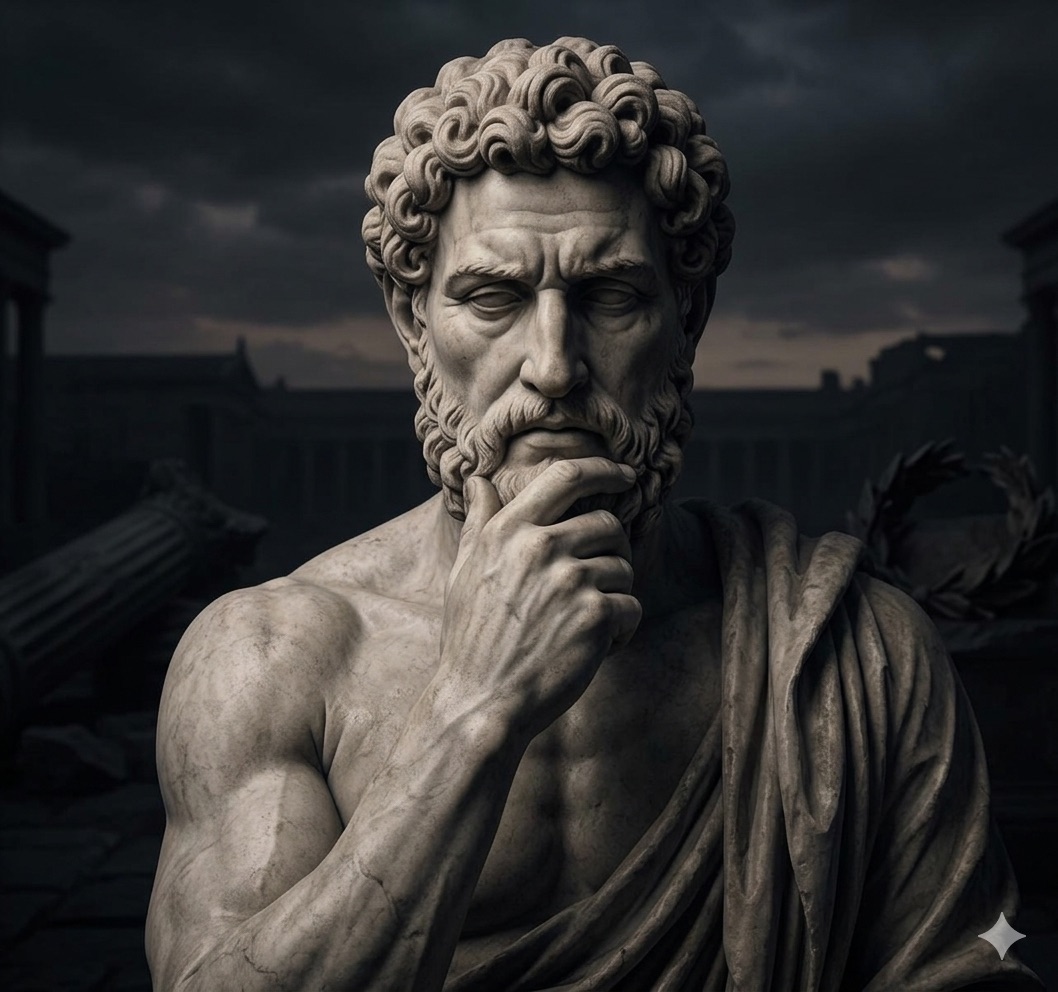

Hey there, friend. Ever feel like life throws really big, fast curveballs? You know, those moments when your heart races, your stomach does flips, and you just want to run and hide? We all do. Whether it’s a huge deadline at work, a tough conversation you need to have, or something totally unexpected, staying calm can feel impossible. But what if there was a way to keep your cool, even when everything feels like it’s spinning out of control?
If the philosophy is unfamiliar, begin with our plain-English guide to Stoicism before applying these techniques under pressure.
Good news! There is. It’s called Stoicism. And it’s not about being emotionless or tough. It’s about being wise. It’s about finding inner peace, no matter what happens outside. Think of it like having a superpower for your mind. We’re going to explore some Stoic secrets today to help you find your calm under pressure.
Understanding What You Can Control (and What You Can’t)
This is one of the biggest ideas in Stoicism. And it’s super important. Imagine you’re driving, and suddenly there’s a massive traffic jam.
Can you control the traffic? Nope.
Can you control the weather? Not at all.
Can you control what other drivers do? Definitely not.
But can you control how you react to the traffic? Yes! Can you choose to put on some calming music instead of getting angry? Yes! Can you choose to use that time to think or relax? Absolutely.
This distinction is key to mastering Stoic principles. Many of our worries come from trying to control things that are simply out of our hands. When we focus on those, we get frustrated and stressed.
Your Inner World is Yours
Your thoughts are yours. Your feelings are yours. What you choose to do, that’s yours too.
Nobody can make you angry. You choose to be angry. Nobody can make you upset without your permission.
This doesn’t mean you won’t feel things. No, you will. But it means you decide how you respond to those feelings.
Letting Go of the Outer World
Trying to push against things you can’t change is like trying to hold back the tide. It’s exhausting and useless.
When a stressful situation hits, first ask yourself: “Is this within my control?”
If the answer is no, then breathe. Let it go. Focus on what you can do.
If you’re interested in exploring more about Stoic principles and how they can help you navigate life’s challenges, you might find the article on simple life lessons from Epictetus particularly insightful. This piece delves into the teachings of one of the most prominent Stoic philosophers and offers practical advice on maintaining composure and clarity in the face of adversity. To read more, visit Simple Life Lessons from Epictetus.
The Power of Perspective: How You See Things Matters
Imagine two people get caught in the rain without an umbrella.
Person A: “Oh no! My day is ruined! I’m going to be soaked and sick!”
Person B: “Well, this is unexpected. A little rain won’t hurt me. I’ll just dry off.”
Who do you think is calmer? Person B, right? It’s not the rain that’s the problem. It’s how each person sees the rain.
This is perspective. And it’s a huge Stoic concept.
Reframing Challenges
A challenge isn’t always a problem. It can be an opportunity.
Maybe that traffic jam is a chance for quiet reflection. Maybe that difficult conversation is a chance to practice being clear and kind.
Stoics don’t see things as good or bad in themselves. They are just events. Our judgments make them good or bad.
Practicing “Premeditatio Malorum”
This is a fancy Stoic term. It means “pre-thinking bad things.” Sounds a bit gloomy, right? But it’s actually super helpful.
It’s not about being negative. It’s about being prepared.
Imagine you have a big presentation. Instead of just hoping it goes perfectly, imagine a few things that could go wrong.
Maybe the projector stops working. Maybe you forget a line.
Then, think about how you would handle it calmly.
If the projector dies, you could say, “Looks like we’re going old school! Let me tell you about it instead.”
By thinking about difficulties beforehand, they don’t hit you as hard when they happen. You’ve already practiced your calm response.
Everything is Temporary
Think about a hot summer day. It’s super uncomfortable. But eventually, it cools down.
Think about a bad mood. It feels like it will last forever. But it passes.
This helps you stay calm under pressure. Remember that difficult moments, too, will pass. They are not permanent.
The Art of Acceptance (Amor Fati)
This is perhaps the most beautiful Stoic principle. “Amor Fati” means “love of fate.”
It doesn’t mean you just sit back and let bad things happen without trying to change them. Not at all.
It means accepting what has already happened or what cannot be changed with grace. It means embracing it, even.
Not Resisting Reality
Imagine you accidentally spill coffee on your new shirt. Your first reaction might be anger or frustration.
But the coffee is spilled. It happened. No amount of anger will un-spill it. In fact, anger only makes you feel worse.
Acceptance means saying, “Okay, this happened. Now what?”
It allows you to move on to finding a solution (like cleaning the shirt) instead of stewing in negative emotions.
Turning Obstacles into Opportunities
The Stoic philosopher Marcus Aurelius said, “The impediment to action advances action. What stands in the way becomes the way.”
Think about that for a second. An obstacle isn’t just something to get around. It’s something that makes you find a new path. It forces you to be creative.
If your usual route to work is closed, you have to find a new one. That frustration can turn into discovering a new, perhaps better, route.
This perspective is crucial for mastering Stoic principles. It switches your mindset from victim to problem-solver.
Accepting Imperfection
Life isn’t perfect. People aren’t perfect. You aren’t perfect.
And that’s okay. When you accept this, a huge burden lifts.
When someone disappoints you, instead of getting furious, you can think, “Humans are fallible. It’s part of life.”
This allows you to approach situations with more understanding and less anger, helping you remain calm under pressure.
Practicing Mindfulness and Presence
Ever feel like your mind is racing ahead, worrying about tomorrow, or regretting yesterday? That’s totally normal.
But it also steals your calm from right now.
Stoicism, long before modern mindfulness, encouraged focusing on the present moment.
The “Now” is All You Have
Think about it. Can you live in yesterday? No. Can you live in tomorrow? Not yet.
All you ever truly have is this very moment.
When you bring your attention to what is happening right now, a lot of worries about the past and future tend to fade.
Simple Mindfulness Exercises
You don’t need to sit on a cushion for hours. Just try this:
- Notice your breath. Feel the air coming in and out. Don’t change it, just observe it for a minute.
- Focus on one sense. What do you hear right now? What do you see right now? What do you smell?
- Engage fully. If you’re drinking tea, really taste it. Feel the warmth of the cup. Notice the steam.
These small acts bring you into the present. And in the present, often, the “pressure” isn’t as bad as your mind makes it out to be.
Don’t Borrow Trouble
This is a great saying. It means don’t worry about things that haven’t happened yet, or might never happen.
When your mind starts running away with “what ifs,” gently pull it back.
“I will handle that if and when it happens. For now, I am here.”
This helps a lot in mastering Stoic principles and keeping your peace.
In exploring the ways to maintain composure during challenging situations, you may find it beneficial to read about how Stoics approach the influence of others on their self-perception. This perspective is crucial for staying calm under pressure, as it emphasizes the importance of internal control over external opinions. For a deeper understanding of this concept, check out the article on why Stoics don’t let other people define them at this link.
Virtue as Your Guiding Compass
This might sound a bit old-fashioned, but it’s incredibly powerful. Stoics believed that living a good life meant living a virtuous life.
What does that mean? It means choosing to act with wisdom, courage, justice, and self-control.
The Four Cardinal Virtues
These are the big ones in Stoicism.
- Wisdom: Knowing what is truly good, bad, and indifferent. It’s about seeing things clearly.
- Courage: Not just physical bravery, but moral courage. Doing the right thing even when it’s hard or scary.
- Justice: Treating others fairly and kindly. Being a good citizen of the world.
- Temperance (or Self-Control): Mastering your desires and impulses. Not letting emotions run wild.
When you face a moment of pressure, ask yourself: “What would the wise, courageous, just, and self-controlled thing to do be right now?”
Your Actions Define You
You can’t control what happens to you, but you can always control how you act.
And those actions, when guided by virtue, will always lead you to a path of inner calm.
If you act with honesty, you won’t have the pressure of hiding anything. If you act with kindness, you won’t live with regret for being mean.
Focusing on What Truly Matters
In the heat of a moment, it’s easy to get caught up in trivial things. But if you ground yourself in virtue, you remember what’s truly important.
Is it more important to “win” an argument or to maintain a respectful relationship?
Is it more important to get every single thing on your to-do list done, or to take a moment for self-care so you can be effective later?
Virtue helps you prioritize what counts for a calm and meaningful life. This is key to mastering Stoic principles, as it gives you a strong internal framework.
The Practice of Journaling and Self-Reflection
Stoicism isn’t just about reading books. It’s about doing. It’s a practice, like learning a sport or a musical instrument.
And one of the best tools for practice, for mastering Stoic principles, is journaling.
The Daily Check-In
At the end of your day, take a few minutes. Just write down some thoughts.
- What went well today?
- What was challenging?
- How did I react when things got tough?
- Did I act according to my values (wisdom, courage, etc.)?
- What could I do better tomorrow?
This isn’t about judging yourself harshly. It’s about learning. It’s about becoming more aware of your mental habits.
Evening Review, Morning Preparation
The Stoics often suggested an evening review. It helps cement the day’s lessons.
And in the morning, a brief thought about the day ahead.
“What challenges might I face today? How will I approach them calmly?”
This simple mental rehearsal sets you up for success.
A Conversation with Yourself
Think of your journal as a friend you can be completely honest with.
It’s a place to sort out your thoughts and feelings without judgment.
Writing things down often makes them clearer. It takes them out of your head, where they can spin wildly, and puts them on paper, where you can look at them more objectively.
This self-reflection is a powerful way to make these Stoic ideas stick. It helps you see where you’re doing well and where you can grow, allowing you to calmly improve each day.
Finding Your Inner Citadel
The Stoics talked about building an “inner citadel.” This is your strong, safe place inside yourself. No matter what chaos is happening outside, your inner citadel remains untouched.
It’s built from understanding what you can control, seeing things clearly, accepting what is, being present, and living with virtue.
It’s not something you achieve once and then you’re done. It’s something you build and strengthen every day, bit by bit.
Every time you choose calm over anger, understanding over frustration, acceptance over resistance, you’re adding another brick to your inner citadel. And the stronger it gets, the more easily you’ll find your calm, no matter what pressure life throws your way.
So, next time life gets a bit crazy, remember these simple yet profound Stoic principles. Take a breath. Ask yourself a few questions. And remember your power to choose your response. You’ve got this.